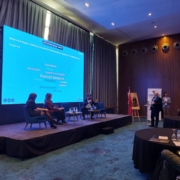
panel of people on stage sitting behind a table in a conference room during the Ports and Climate Change adaptation workshop in Vigo on 29 October 2025

WestMED’s Green Shipping Technical Group shares synergies at the Atlantic’s Ports and Climate Change Adaptation national event

On 29 October 2025,  The Atlantic’s Maritime Strategy  Pillar I national event: ‘Ports and Climate Change Adaptation,’ took place at the Port Authority of Vigo. 

This in-person event gathered 30 participants, including representatives from national authorities, port operators, and international initiatives, to discuss how ports can lead the way in decarbonisation, green infrastructure, and climate resilience.

Key highlights of the event include:

  • Strategic Alignment: The session showcased the progress of Pillar I of the Atlantic Action Plan, emphasizing ports as gateways for the blue economy and their role in adapting to climate change.
  • Policy Updates: Spanish authorities presented the recently approved Maritime Strategy 2025–2050, setting a long-term vision for sustainable maritime transport.
  • Synergies Across Sea Basins: The event featured contributions from the WestMED Green Shipping Technical Group, represented by Mr. Leonardo Manzari, highlighting opportunities for collaboration on green shipping and energy transition.
  • Interactive Dialogue: Led by ICSEM, participants engaged in a hands-on session to identify and prioritize challenges for ports in their energy transition, exploring potential energy sources and prototypes to guide future innovation.

Next Steps:

  • Finalize a document compiling port climate adaptation challenges and priorities.
  • Strengthen exchanges with the WestMED Sustainable Maritime Transport Technical Group.
  • Explore partnerships for new consortia and project development.

As Mrs. Marta Villaverde, Conselleira do Mar, noted:“Ports are important commerce, economy, and blue economy hubs.”

This event reaffirmed the Atlantic Strategy’s commitment to sustainable transport and resilient ports, paving the way for collaborative solutions that support the EU’s climate and ocean goals.

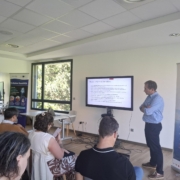
leonardo Manzari presenting the work of WestMED's Green Shipping Technical Group including synergies and cooperation opportunities


Fishing vessel

EU Commission Simplifies and Harmonises Fisheries Control Rules Across the Union

The European Commission has adopted new detailed rules on fisheries control and enforcement, aiming to harmonise proceduressimplify compliance, and reduce administrative burden for EU countries and operators. These measures are designed to prevent overfishing, ensure fairness among fleets, and modernise the way fishing activities are monitored across the EU.

Key Features of the new rules:

  • Digitalisation of Catch Reporting: Progressive implementation of a fully digitalised system for recording and reporting catches, providing real-time data to improve stock management and control.
  • Harmonised Data Exchange: Standardised formats and transmission requirements, with lighter obligations for small-scale vessels.
  • Vessel Tracking: Clear technical requirements for monitoring devices, transmission frequency, and position data, with flexibility in case of technical failures.
  • Streamlined Inspections: Common templates for digital inspection reports to speed up reporting and enable easier cross-checking between Member States.
  • Penalty Points System: Harmonised registration of penalty points for vessel masters to ensure a level playing field for serious infringements.
  • Fishing Gear Marking: Flexible labelling requirements for vessels under 15 metres operating nearshore with passive gear.

Next Steps:
The rules – comprising a Delegated Act and an Implementing Act – were published in the Official Journal on 12 November 2025. They will apply from 10 January 2026, with transitional arrangements for certain provisions until 2028, ensuring a smooth adaptation for Member States and operators.

These changes follow extensive consultation with Member States, fishers, industry representatives, regional authorities, and NGOs, reflecting a shared commitment to sustainable fisheries and fair enforcement across Europe.

man holding phone with checkmark in display - sea in the background.

SURVEY – Help shape the future of Mediterranean initiatives supported by the EU

As part of the implementation of the WestMED Initiative, we invite project beneficiaries to share insights and experiences through this short survey.

Project beneficiairies are those organizations, institutions, or groups that receive or have received direct support or funding for projects in the Western Mediterranean through funding under EU programmes such as EMFAF, Horizon Europe, INTERREG and others.

Your input is essential to assess the coverage, availability, and ongoing relevance of EU-funded programmes and to improve their design and implementation.

By contributing, you will help us identify lessons learned and shape future sustainable blue economy initiatives in the Mediterranean, ensuring they meet the needs of diverse stakeholders—including participants from both EU and non-EU countries.

About the Survey

  • Duration: It will take less than 15 minutes to complete.
  • Confidentiality: All responses will be handled in strict compliance with data protection regulations and used only in aggregated and anonymous form.
  • Scope: You may base your answers on your experience with one or multiple EU-funded projects.

The questionnaire is structured around 6 Sections:

  1. Introduction
  2. Access to funding
  3. Project results and impact
  4. Networks and consortium building
  5. Understanding the barriers in cross-national and sea basin cooperation
  6. Follow-up and continuation of projects.

The survey will remain open until the end of February 2026.

On behalf of the European Climate, Infrastructure and Environment Executive Agency (CINEA), thank you for your time and valuable contribution.

aquaculture

New Study: Climate Change Adaptation in EU Aquaculture

The European Commission has published a comprehensive study on climate change adaptation in EU aquaculture, providing a timely assessment of the sector’s vulnerabilities, challenges, and opportunities in the face of a changing climate.

Aquaculture is a vital part of Europe’s blue economy, supplying healthy food, supporting coastal communities, and contributing to economic growth. However, the sector is increasingly exposed to climate-related risks such as rising sea temperatures, ocean acidification, extreme weather events, and shifting disease patterns.

Adapting EU aquaculture to climate change is essential for safeguarding food security, jobs, and the health of marine and freshwater ecosystems. The report highlights the importance of collaboration between industry, researchers, and policymakers to accelerate the uptake of adaptation measures and ensure the long-term sustainability of the sector.

Marta Pascual, Stephanie Vella moderating the session on

WestMED highlights the importance of Tourism Indicators at the International Sun&Blue Congress 2025

On 19 and 20 November 2025, the Sun&Blue Congress brought together 832 professionals, 37 guest countries, 21 round tables, and 123 speakers, confirming the growth and global dimension of this international congress focused on Tourism and the Blue Economy.

This third edition of the Sun & Blue Congress developed a scientific programme with 11 side events – 45% of them international – which served as spaces for cooperation and knowledge transfer.

WestMED at Sun&Blue 2025
The WestMED Assistance Mechanism has played a central role at the Sun&Blue Congress ever since its launch in 2023 as an official partner, with Marta Pascual acting as a moderator, panellist and a member of the Advisory Board, representing Spain as the National Hub for the WestMED Initiative as well as the coordinator of WestMED’s Technical Group on Sustainable Tourism.

During the conference there were three events where Marta Pascual was active on behalf of the WestMED Initiative:

  • As a panellist during the side event: Interreg projects in Blue Economy: present and future – on  good practices in the blue economy promoted by Interreg MMM, with high potential for scalability and/or replicability in the Mediterranean and other EU regions
  • As a moderator of a high level panel titled Europe’s Advances Towards Sustainability in Tourism – A political and strategic vision of sustainable European tourism – analysing Europe’s strategic role in transforming tourism towards more sustainable models, linked to the Green Deal, the Digital Agenda, and the Next Generation Funds
  • As an organiser of WestMED’s side event on Tourism Indicators

Marta Pascual speaking at the sun&blue congress 2025

Tourism Indicators – a WestMED side event
As in previous editions, the WestMED organised a side event for stakeholders during the Congress.

The topic of this year’s side event was the importance of  Tourism Indicators. It was co-organised with Stephanie Vella from WestMED’s  Maltese National Hub (also coordinator of WestMED’s technical Group on Sustainable Tourism), and Alessandro Pititto from the Blue Economy observatory.

The objective of the workshop titled ‘Blue Tourism Indicators: Sailing towards common approaches‘ was to share knowledge about and experience the types of tourism indicators that currently exist, how they differ, and what they have in common.

The session was opened by framing the purpose of the workshop and introducing the need for comparable, robust tourism indicators to set the stage for technical exchanges among researchers, statisticians, economists, and data specialists (watch the presentation slides that were used for the opening)

Participants were able to share solutions/methodologies to collaborate on a common solution for all. MENTIMETER was used as a tool to gather instant feedback from participants: resulting in graphs like these:

Graph.displaying most pressing challenges for tourist destinations


graph displaying tourism intensity reflecting pressure on communities

The discussion with the audience focused on how to address indicators for two main tourism topics: Tourism Seasonality and Tourism Intensity.

Participants associated tourism seasonality with challenges like overcrowding, fluctuating demand, especially during holidays, and precarious work conditions. They highlighted the pressure seasonality puts on destinations and noted weak promotion as a related factor.

There was strong consensus on the critical importance of indicators for managing sustainable tourism effectively. Many emphasized that robust indicators are crucial for developing real solutions and balancing the social, economic, and environmental aspects of tourism.


For more information contact Marta Pascual (WestMED National Hub Spain) or Stephanie Vella (westMED National Hub Malta)

More on the 2024 WestMED Contribution: An international showcase of sustainable initiatives and the launch of WestMED’s Sustainable Tourism Technical Group


Tobruk University Hosts the 2nd International Scientific Conference on Tourism and Archaeology with Active Participation from the WestMED Initiative

On 16 November 2025, The Tobruk University, through its Faculty of Tourism and Archaeology, successfully organized the 2nd International Scientific Conference on Tourism and Archaeology, gathering academics, researchers, and tourism professionals from across Libya and the Mediterranean region. The event underscored the university’s commitment to advancing research and capacity in cultural heritage, sustainable tourism, and archaeology.

The conference was spearheaded by a dedicated Organizing Committee, led by prominent figures such as Dr. Belieed and Dr. Abdulbasit, who played a key role in designing the scientific program, coordinating panels, and ensuring broad participation. Their leadership helped make the event a dynamic platform for dialogue and cooperation.

WestMED facilitating sustainable tourism initiatives
The  WestMED Initiative was represented by Ms. Stephanie Vella, Malta’s National Hub and Dr. Masauda Abuarosha from Libya’s National Hub.

During her intervention, Ms. Stephanie Vella presented the WestMED Tourism Technical Group in-depth, explaining its mission to promote sustainable tourism in the western Mediterranean. She detailed how the group operates, the kinds of projects it supports (such as community- based tourism, capacity building, and cross-border initiatives), and how interested stakeholders can engage. She also encouraged researchers, students, and tourism practitioners to register and take part in the Tourism Technical Group, highlighting that active involvement opens doors to regional cooperation, training opportunities, and the ability to contribute to future Mediterranean tourism strategies.

Dr. Masauda Abuarosha, shared Libya’s ongoing engagement with WestMED, including efforts to establish a Libyan Maritime Cluster, foster university-to-university cooperation, and integrate blue economy thinking into tourism and heritage preservation. She emphasized that Libya’s coastline offers valuable potential for sustainable maritime tourism and cultural conservation.

The presence of WestMED at the conference sparked considerable interest among attendees, especially given the initiative’s growing influence in promoting sustainable coastal development, protecting marine heritage, and enabling innovation in the blue economy.

In his closing remarks, the President of Tobruk University and the Organizing Committee  thanked the WestMED representatives for their vital contribution, Tobruk University reaffirmed its dedication to fostering academic excellence, regional partnerships, and sustainable development in the fields of tourism and archaeology.

For more information: contact Masauda Abuarosha: libya@westmed-initiative.ec.europa.eu

Man presenting at conference


Stephanie Vella presenting online at Libyan Conference - nov 16 2025

heads of the scientific and organisation committee for the 2025 conference in Libya on Tourism and Archaeology at the University of Tobruk

Libya Strengthens its Blue Economy Research

Recognition of Outstanding Researchers in Benghazi Coincides with the Establishment of the First Marine Technology College in the Eastern Region Cyrenaica.

As part of Libya’s growing commitment to advance scientific research and developing its blue economy, the Ministry of Technical and Vocational Education held a ceremony in Benghazi on 15 November 2025 to honor distinguished researchers and graduates within the framework of the Scientific Excellence Award – – Second Edition

Among the honorees was Sarah Al-Mabrouk, recognized for her valuable contributions in the field of marine sciences.

This recognition comes at a pivotal moment, following the issuance of Cabinet Decision No. (91) of 2025, which officially establishes the Marine Technology College in Derna — the first institution of its kind in the Eastern Region (Barqa).

The newly established college will enjoy financial and administrative independence and will fall under the Ministry of Technical and Vocational Education, with its budget to be integrated into the national budget starting in 2026. The decision also mandates coordination with the Ministry of Higher Education and Scientific Research to approve the college’s internal regulations and academic departments.

The establishment of this college represents a significant milestone in building national capacities in marine technology, navigation, marine resource management, and applied maritime sciences. It reinforces Libya’s commitment to developing a sustainable blue economy grounded in knowledge, innovation, and skilled human resources.

The WestMED Initiative commends these national efforts, viewing the recognition of young researchers and the creation of the Marine Technology College as essential steps toward strengthening maritime education, enhancing research capabilities, and supporting sustainable coastal development in Libya.

WestMED congratulates all the award recipients and welcomes the establishment of the Marine Technology College as a strategic advancement toward a more resilient and prosperous blue economy for the country.

For more information contact the WestMED National Hub Libya (Masauda  Abuarosha): libya@westmed-initiative.ec.europa.eu


WestMED Mauritanie au Sommet Atlantique, Marine, Energie et Support Industriel 2025

Le Sommet Atlantique, Marine, Energie et Support Industriel (AMEISS), organisé Conjointement par Oneport et la Fédération Nationale de l’Industrie, des Mines et de l’Energie s’est tenu à Nouakchott, à l’hôtel Fasq les 28 et 29 Octobre 2025 et a connu la participation de plusieurs acteurs industriels, institutionnels, de la recherche et des experts de la Mauritanie et de l’Espagne pour discuter les opportunités de partenariats dans le domaine du développement énergétique et maritime entre les Canaries et la Mauritanie.

Le Hub National de la Mauritanie a participé activement en tant que paneliste au Panel Economie Bleue, Gouvernance Et Collaboration « Réponse aux urgences maritimes, efforts et collaboration de l’économie bleue en Mauritanie ».

Au cours de ces interventions, Dr. Mohamed Lemine Abdel Hamid, Hub National de la Mauritanie a tout d’abord présenté l’Initiative WestMED de l’Union Européenne, son historique, ses objectifs, ses membres et la structure de son mécanisme d’assistance. Il a rappelé que la Mauritanie a eu la chance de co-présidé l’initiative en 2022 et 2023. Dans un deuxième temps, il a présenté les principales réalisations du Hub National dans le domaine de la promotion de l’économie bleue en Mauritanie, dont entre autres, l’organisation de six évènements nationaux dédiés entre 2019 et 2025, la création du cluster maritime mauritanien qui fédère les principaux acteurs de la mer, l’institutionnalisation d’un poste de Conseiller Technique en Charge de l’Economie Bleue et des Affaires Maritimes au niveau du Ministère de la Pêche et des Infrastructures Maritimes et Portuaires. Il a ainsi rappelé que les efforts de l’Initiative WestMED en Mauritanie ont inspiré les autres partenaires en Mauritanie.

Dans ce cadre il a cité la Banque Mondiale qui prépare actuellement un grand projet WACA+ qui devrait comprendre un volet dédié à la promotion de l’économie bleue en Mauritanie. De même, la BIE vient de signer une convention de prêt de 20 millions d’euro avec une Banque mauritanienne (BEA- Al AMANA) destinée au financement des projets dans le domaine de l’économie bleue en Mauritanie.

L’intervention du Hub National de la Mauritanie a siccité beaucoup d’intérêt de la part des participants.

En marge de cet évènement, le Hub National de la Mauritanie a rencontré le Cluster Maritime des Canaries pour discuter des opportunités de collaboration.

Pour plus d’informations, veuillez contacter le centre national WestMED Mauritanie (Mohamed Lemine) : mauritania@westmed-initiative.ec.europa.eu


Mohamed Lemine at the Ameis Summit 2025 - one-on-one meeting with a colleague

Copyright photos: Ameis Summit 2025


Family photo of participants at the WestMED National event on Blue Skills 2025 in Tunis

Tunisia charts the course for a Blue Skills National Strategy by 2030

La Tunisie trace la voie d’une stratégie nationale pour les compétences bleues à l’horizon 2030

Tunis, 28 octobre 2025 – Hôtel Acropole, Lac 1

Le Hub national de l’Initiative WestMED – Tunisie, en partenariat avec les ministères, les universités, les centres de formation et les acteurs économiques, a organisé le Séminaire national sur le développement des compétences bleues, une rencontre inédite ayant réuni 112 participants issus de tous les secteurs liés à l’économie bleue.

Un événement inédit et fédérateur

Pour la première fois, l’ensemble des institutions publiques, des universités, des centres de formation professionnelle, des entreprises maritimes, des start-ups bleues et des ONG se sont réunis pour co-construire une vision commune du développement des compétences bleues en tunisie.

L’objectif principal était  d’élaborer une feuille de route nationale 2026–2030 afin de moderniser les systèmes d’enseignement et d’adapter la formation aux besoins émergents de l’économie maritime.

Des échanges riches et des recommandations concrètes

Les sessions plénières, modérées par des expertes et responsables tunisiens, ont permis d’aborder les grands enjeux de la formation maritime, de la recherche appliquée, et de la coopération intersectorielle.
Les quatre ateliers thématiques ont formulé des propositions précises portant sur :

  • l’intégration des compétences bleues dans l’enseignement secondaire,
  • la modernisation des formations professionnelles et universitaires,
  • et la création d’une plateforme nationale de coordination et de gouvernance.

Les participants ont convenu de la nécessité de créer un cadre national de compétences bleues, de développer des filières émergentes (énergies marines, aquaculture, économie circulaire, tourisme côtier), et de favoriser l’inclusion des jeunes et des femmes dans ces nouveaux métiers.


Un engagement collectif pour la jeunesse et la durabilité

Les travaux ont mis en lumière l’importance d’investir dans le capital humain maritime comme levier de développement durable.
Les partenaires se sont engagés à poursuivre cette dynamique à travers la rédaction participative de la feuille de route nationale 2026–2030 et la mise en œuvre d’actions pilotes régionales dès 2026.


Une étape clé pour l’économie bleue en Tunisie

Ce séminaire, soutenu par le projet WestMED et la Commission européenne, marque une étape décisive dans la construction d’une économie bleue tunisienne plus innovante, inclusive et durable.
Il positionne la Tunisie comme un acteur moteur en Méditerranée occidentale, prêt à transformer ses atouts maritimes en opportunités d’emploi et de prospérité pour sa jeunesse.

Contact presse :

Hub national pour l’économie bleue durable – Initiative WestMed (Tunisie)


Contact presse :

Hub national pour l’économie bleue durable – Initiative WestMed (Tunisie)
Imed Zammit
Cell : +21698168167 | Email : tunisia@westmed-initiative.ec.europa.eu

Group of people in conference room. WestMED National event 2025 in Tunis

group of people discussing during a break out session in front of a flipchart at the WestMED National event 2025 in Tunis on Blue Skills Group of people during ci=onferenbce break at the WestMED National event 2025 on blue skills in Tunis two people seated at a table discussing Participants at round table at the WestMED National event 2025 in Tunis

DTF25 conference sign with cruise ship in background

DTF 2025 Conference hosted in Malta: Driving the Future of Sustainable Maritime Transport

The 2025 edition of the Decarbonizing the Future (DTF) conference was held in Malta on 16–17 October, bringing together international experts, policymakers, and industry leaders under the theme “Ports. Power. Partnerships.” The conference served as a key platform for advancing dialogue on sustainable transport, digitalisation, and the decarbonisation of maritime operations in particular through the provision of Onshore Power Supply (OPS).

Organised by EOPSA, Transport Malta and Med Ports Association, the two-day event underscored the growing importance of OPS as a pivotal technology to reduce emissions in ports and align with the EU Green Deal, Fit for 55, and TEN-T objectives. Participants explored pathways to achieve cleaner, more efficient port operations and strengthen collaboration among national and regional maritime authorities.

WestMED at DTF
As part of the DTF Conference, the WestMED Initiative hosted a dedicated side event on “Advancing Sustainable Transport through Onshore Power Supply”. Jointly organised by the WestMED National Hubs for Malta and Italy, the session highlighted the Mediterranean region’s pivotal role in advancing OPS as a tool for sustainable maritime transport.

The event brough together a diverse panel of stakeholders — including government and industry representatives, port authorities, NGOs, and cluster organisations — who discussed opportunities for collaboration, knowledge sharing, and access to EU and regional funding to scale up OPS implementation.

The discussion focused on:

  • How to scale up OPS across Mediterranean ports;
  • The role of EU and regional funding to support OPS implementation;
  • Cross-border cooperation and knowledge-sharing among ports in the WestMED region;
  • Addressing the policy, technical and investment challenges of decarbonising port operations.

On 17 October, Stephanie Vella (WestMED National Hub Malta) took to the main stage, where she spoke about the #MediterraneanPact that had just been launched, its relevance for regional cooperation on port decarbonisation and the supporting role of WestMED through its Technical Group on Green Shipping.

OPS Connection of MSC Explora II to OPS at Valletta’s port facility
A notable practical outcome during the conference was the connection of MSC Explora II to OPS at Valletta’s port facility, demonstrating the OPS connection. The occasion was marked during a high-level event attended by the Prime Minister of Malta and senior government officials.

MoU DTF and TÜRKLİM
Another key milestone of the DTF 2025 Conference was the signing of a Memorandum of Understanding (MoU) between DTF and TÜRKLİM, the association representing 78 private ports and terminals in Türkiye. TÜRKLİM plays a vital role in shaping container, cruise, and liquid bulk operations.

The MoU marks an important chapter in regional cooperation. It reflects DTF’s commitment to expanding its partnerships across the Mediterranean and strengthening the region’s collective capacity to meet climate and digital transformation goals.

The conference concluded with a call to action: to translate dialogue into implementation through concrete projects and collaborative frameworks. As the maritime sector continues its transition toward a low-carbon future, the partnerships and insights forged in Malta are expected to shape future developments across the Mediterranean and beyond.

Stephanie vella on the main stage presenting the westMED Initiative at DTF25