Posts

brochure announcement with mock of the brochure with coverpage and 2 middle pages

2026 WestMED Brochure – 8 years on

The 2026 edition of the WestMED Initiative has been released.

It highlights the major results of the WestMED Initiative since its launch in 2017 with a focus on the achievements since the previous 2024 edition of the brochure.

Read about the projects supported by the WestMED Assistance Mechanism, the 38 countries that benefited, the media coverage and much more – including a complete overview of all projects that were awarded funding with the help of the 10 National Hubs.

Download your 2026 edition here

YEP MED Success Story poster with group of students in a port

Success Story. YEP MED Revolutionises Port Skills for Youth across the Mediterranean

The YEP MED project (Youth Employment in Ports of the Mediterranean) is a transformative initiative designed to bridge the widening gap between the rapidly evolving needs of the port‑logistics sector and the skills available in the regional labor market.

Launched in 2020 and co‑financed by the European Union under the ENI CBC Med Programme, the €2.9 million project set out to strengthen “Blue Skills” across seven Mediterranean countries: Spain, Italy, France, Tunisia, Lebanon, Egypt, and Jordan.

Bridging the Skills Gap
At its core, YEP MED responds to youth unemployment in the region by focusing on NEETs (Not in Education, Employment, or Training) and women – groups often underrepresented in maritime and logistics careers. Despite the sector’s rapid growth, a clear mismatch persists between traditional vocational training and the digital, sustainable, and interconnected demands of modern maritime ports.

To address this, the project is built on three strategic pillars:

  • Dual Technical and Vocational Education and Training (TVET) Curricula: Developing vocational training pathways that combine classroom instruction with hands‑on apprenticeships in real port environments.
  • Sustainability & Digitalization: Preparing participants for the future of logistics through training in green port operations, environmental regulations, and digital tools used in port community systems.
  • Public‑Private Partnerships: Creating a collaborative ecosystem linking port authorities, training centers, and SMEs to ensure training remains aligned with industry needs.

 Impact and Innovation
One of YEP MED’s most innovative achievements is the Port Virtual Lab (PVL), a digital simulation platform that immerses students in realistic port‑logistics scenarios. Through the PVL, learners can manage trade routes, coordinate terminal operations, and understand complex supply‑chain interactions in a risk‑free environment.

The project’s measurable results reflect its transformative impact:

  • More than 3,600 students trained in specialized port‑logistics skills
  • Over 1,000 job placements and internships facilitated
  • A regional network of 500+ companies established to support ongoing training and employment

A Lasting Blue Skills Ecosystem
Although YEP MED’s official 30‑month timeline has concluded, the initiative has evolved into a permanent, self‑sustaining ecosystem. Its long‑term relevance was recognized internationally when it received the WestMED Project Award 2025, confirming its status as a benchmark for blue skills development and regional cooperation.

WestMED 2025 best project award winner YEP MED on stage

Watch the project pitch recording by YEP MED at the WestMED Conference

Scaling beyond the Mediterranean
The Port Virtual Lab has grown far beyond its initial scope. Developed by the Escola Europea – Intermodal Transport, It is actively used across the Mediterranean and is reaching new regions like the Americas. This expansion reflects YEP MED’s shift from a regional project to a global training model.To ensure sustainability, YEP MED prioritizes a Training of Trainers (ToT) approach, equipping educators with digital and experiential teaching methods. This is supported by CHIRON, a collaborative space where educators can exchange experiences, co-develop case studies, discuss pedagogical approaches, and jointly innovate teaching practices with peers from other institutions.

Sustaining the Community through PLIKA
To maintain momentum, the project launched PLIKA (Port Logistics International Knowledge Academy) as its structural legacy. PLIKA connects training centers, ports, and professionals through continuous capacity building, innovation challenges, and hackathons. Its reach is expanding through the OPEN TRADE MED project, which is bringing YEP MED methodologies to Algeria and Lebanon.

This evolution coincides with a major milestone for the project’s lead coordinator: the 20th anniversary of the Escola Europea – Intermodal Transport in 2026. Rather than looking back, the Escola is using this moment to shape the next two decades. New initiatives, such as the “Education Beyond Intelligence” course on human skills in the age of AI and the creation of Arete Plazas in key Mediterranean ports ( physical spaces dedicated to excellence, ethics, and human development), ensure that the spirit of YEP MED remains active, adaptive, and ready to guide the future of global port logistics.

(More on how YEP MED expanded after the project’s official ending – pdf)

EU’s support for Blue Skills
The European Union has become a central driver of Blue Skills development, investing in training, innovation, and workforce transformation to help coastal regions adapt to the digital and sustainable transition of the blue economy.  The newly launched European Ocean Pact identifies “advancing ocean research, knowledge, skills and innovation” as one of its six overarching priorities and announces flagship actions to foster blue innovation, literacy, and skills development. The Pact introduces a Blue Generational Renewal Strategy (by 2027) aimed at nurturing a new generation of ocean professionals in marine science, ocean technologies and sustainable fisheries. It highlights the importance of upskilling, digital and entrepreneurial competences, female and youth participation, and appropriate working conditions, as essential drivers for a prosperous and attractive blue economy.

Furthermore, the newly adopted Pact for the Mediterranean, a major EU initiative establishing a new strategic partnership framework between the EU and Southern Mediterranean countries, also acknowledges skills, education and research as foundational pillars for a resilient and integrated Common Mediterranean Space. Within its first pillar, “People: driving force for change, connections and innovation”, the Pact calls for investments in education, skills, circular migration and livelihoods, and announces the creation of a Mediterranean platform on higher education as well as a T-MED Skills Agenda to address workforce and gender gaps, aligning training with the needs of industry and the green and digital transitions.

Through funding programmes such as ENI CBC Med, Interreg, Erasmums+, EMFAF and regional initiatives under the WestMED Framework, the EU, its Member States and partner countries support vocational training, port‑logistics upskilling, digital simulation tools, and stronger cooperation between education providers and industry.

A recent major EU study on Blue Skills resulted in a Blue Competency Framework for education providers, policy makers, employers and people seeking a career in the maritime sector.

This coordinated effort ensures that young people, women, and professionals gain the competencies needed for emerging maritime sectors -from green shipping to marine renewable energy.

Building on this momentum, WestMED will launch a dedicated Blue Skills Technical Group in 2026, creating a permanent platform for countries, experts, and training institutions to jointly advance skills development across the Mediterranean.

More info about YEP MED
Budget Total:  € 2.981.600

EU Contribution: € 2.610.000

Partners/ Countrieshttps://escolaeuropea.eu/ Coordinator/ lead: Escola Europea de Short Sea Shipping  (Spain)

Port Authority of Barcelona  (Spain)

Port Authority System of Center-North Tyrrhenian sea (Italy)

Chamber of Commerce, Industry & Agriculture of Beirut & Mount Lebanon (Lebanon)

Arab Academy for Science, Technology and Maritime Transport – port training institute (Egypt)

The Mediterranean Institute of Maritime Training (Tunisia)

Merchant Marine and Ports Authority of Tunisia (Tunisia)

Valenciaport Foundation (Spain)

Marseille Fos Port (France)

Damietta Port Authority (Egypt)

Aqaba Development Corporation (Jordan)

Associated partners

MEDPorts Association (Spain)

Consell Valencià de la Joventut  (spain)

Follow Website

Social media:

Facebook

YouTube

Instagram

LinkedIn

Duration 9 September 2020 – 08 December 2023


YEP MED Project Executive Summary

YEP MED studens in classroom holding diplomas

mediterranean sea coastline

Spain Assumes WestMED Co‑Presidency with a Vision of Synergies among Sea Basins

Opening welcome message from the new WestMED Co-Presidency

Dear WestMED community,

From January 2026 until the end of 2027, Spain will hold the co-presidency of the WestMED Initiative for a Sustainable Blue Economy in the Western Mediterranean, through the Ministry of Foreign Affairs, European Union and Cooperation. This co-presidency will be shared with Tunisia in 2026, and with Algeria in 2027.

 European policies for the Mediterranean regional area have received a strong boost during 2025, representing a turning point for maritime governance in the region, while generating great opportunities. The Third United Nations Ocean Conference in Nice, and the recent Mediterranean and Ocean Pacts presented by European Commission, which share both vision and objectives with the WestMED Initiative when it comes to the development of a sustainable blue economy, the protection of ecosystems and biodiversity and the support to the coastal communities.

 Additionally, it should be pointed out that during 2026 Spain will also be presiding the Atlantic Strategy.

 Therefore, the Spanish aim during its co-presidency is to take advantage of these interconnections and synergies, not only between Sea Basin Strategies, but also between maritime sector´s development as well as amongst various stakeholder generations, building intergenerational fairness. Accordingly, our shared motto for both strategies will be:

 “Building on synergies for sustainable oceans”

 Spain intends to work closely with its WestMED counterparts and partners, to:

 Launch the new WestMED Technical Group on Blue Skills, result of the initiative of the 2025 Tunisian and Portuguese co-presidencies.

  • Initiate discussions for the launch of a Marine Observation and Data Collection community of practice, in parallel with the Atlantic Strategy. This is a new development, closely linked to the proposals of the EU Ocean Pact, which will be included in the Ocean Act planned by the end of 2026.
  • Take advantage of the simultaneous presidency of the Atlantic Strategy and the co-presidency of WestMed, to boost synergies, bring together blue economy stakeholders and sectors and enhance cooperation between the two Sea Basin Strategies.

 The Spanish co-presidency is delighted to embrace this opportunity, which will enable closer ties and collaboration between the two Sea Basin Strategies in an international context where sustainable maritime issues are becoming increasingly relevant.

Group of people in conference room sitting at round tables to discuss the national blue economy strategy in Nouakchott

WestMED Mauritania contributes to the development of the National Blue Economy Strategy

On 22 to 24 December 2025, WestMED’s Mauritania National Hub and the National Coordinator of the WestMED initiative actively participated in the stakeholder consultative workshop on the development of the national blue economy strategy in Mauritania, Nouakchott. This workshop was  organised by the Inter-African Bureau for Animal Resources of the African Union (AU-IBAR).

It followed on from three similar workshops organised by AU-IBAR in Senegal, Gambia and Ghana. Its objective was to launch the process of developing the national blue economy strategy.

The workshop was attended by some 30 representatives of the relevant public bodies.

After an official opening session led by the Secretary-General of the MPIMP, participants attended two presentations on the pan-African blue economy strategy and its implementation plan, and the blue economy strategy of the Arab Maghreb Union.

Subsequently, three groups were organised, with a focus on:

  1. Identification of objectives, priority areas and thematic areas for the development of the blue economy in Mauritania;
  2. Identification of objectives and priority actions for national blue economy implementation plans; and
  3. Identification of national coordination and blue governance mechanisms. At the end of this work, proposals and guidelines were identified to guide the development of a national blue economy strategy document, which will be submitted to the Mauritanian Government for approval in 2026.

In their presentations, Dr. Mohamed Lemine Abdel Hamid, WestMED’s Mauritanian National Hub, and Dr. Mohamed Lemine Naffa, National Coordinator of the WestMED Initiative, presented the WestMED initiative, its technical Assistance Mechanism and its main achievements since 2019.

They strongly emphasised the need to coordinate efforts and involve all partners engaged in the blue economy in Mauritania, notably the WestMED Initiative and the World Bank, in order to develop synergies and capitalise on experiences, which will lead to an inclusive national strategy adapted to the realities of the Mauritanian context.

This proposal was well received by the representatives of the African Union and was included in the workshop report that will be submitted to the Mauritanian Government and the specialised services of the African Union.

For more information, contact Mohamed Lemine (WestMED National Hub Mauritania)


2025 project awards winners on stage at the WestMED 2025 Conference

Tunis hosts the 5th WestMED Stakeholder Conference: Driving Blue Economy Action Across the Western Mediterranean

On 28 November 2025, over 200 stakeholders from both shores of the Mediterranean gathered in Tunis, Tunisia, for the 5th WestMED Stakeholder Conference – a flagship event of the WestMED Initiative.

Building on previous editions in Barcelona, Algiers, Rome, and Malta, this year’s conference highlighted the role of maritime clusters, blue skills, ocean literacy, energy transition, and maritime spatial planning in promoting a more competitive, sustainable, and resilient blue economy across the Western Mediterranean sea basin.

The conference was hosted by the Tunisian co-presidency of the WestMED and organized by the WestMED Assistance Mechanism, with the support of the European Commission.

Recognizing Excellence: WestMED Project Awards 2025

A highlight of the conference was the announcement of the WestMED Project Awards, now in their third edition. These awards honor outstanding projects aligned with the WestMED priorities, providing winners with visibility and recognition across the Mediterranean blue economy community.

  • Award winners showcased innovation in marine protected areas management, energy transition in fisheries and aquaculture, blue skills and maritime clusters, demonstrating how local initiatives can have a regional impact.
  • This recognition not only boosts the projects’ visibility but also strengthens cross‑border cooperation, encouraging replication of similar initiatives in other sea basins.

This edition showed a record number of 71 applications.  The award winners were:

  • BLUEPSOL: developing solar-powered solutions for sustainable fishing and aquaculture,
    reducing emissions and costs (also voted by participants as the ‘best-of-the-best’).
  • YEP MED: connecting training centres, ports, and companies across the Mediterranean to align education with real labour market needs
  • MPA4Change: empowering Mediterranean MPAs to adapt, build resilience, and combat climate change.
  • BCThubs: building technology excellence hubs, advancing  underwater cultural heritage and sustainable blue economy 
  • CallmeBlue: strengthening Mediterranean clusters, fostering cooperation, empowering communities and enhancing skills inclusively.

European Ocean Pact & new Pact for the Mediterranean

Two major policy frameworks were discussed during the conference:

  • EU Ocean Pact: presented as a unifying framework to safeguard Europe’s seas, it emphasizes sustainability, resilience, and innovation. The conference explored how WestMED priorities support this broader EU agenda.
  • Pact for the Mediterranean: recently launched, this pact aims to align Mediterranean countries around shared commitments for a resilient and sustainable sea basin. The WestMED Assistance Mechanism was highlighted as a bridge between the pact’s ambitions and concrete project implementation.

Together, these pacts signal a new era of Mediterranean maritime cooperation, linking regional action to European strategies.

Launch of the Blue Skills Technical Stakeholder Group
Recognizing that skills gaps are among the biggest barriers to a thriving blue economy, the conference announced the creation of a new technical stakeholder group on Blue Skills.

  • This group will bring together experts from the different Western Mediterranean countries to map skill needs, organise training programs, and promote ocean literacy.
  • It will serve as a platform for universities, training centers, industry, and policymakers to coordinate efforts.
  • By focusing on capacity building, the group aims to ensure that the Western Mediterranean workforce is equipped to drive the energy transition, innovation, digitalization and maritime spatial planning.

Looking Ahead

The 2025 WestMED Stakeholder Conference delivered three clear outcomes:

  1. Celebration of award‑winning projects that exemplify innovation and cooperation.
  2. Integration of the EU Ocean Pact and the Pact for the Mediterranean into WestMED’s operational agenda.
  3. Launch of a technical stakeholder group on Blue Skills, setting the stage for long‑term workforce development.

Together, these outcomes reinforce the WestMED Initiative’s role as a catalyst for sustainable growth, resilience, and collaboration across the Western Mediterranean and beyond. Next year’s co-presidency will be taken over by Spain and Tunisia, in line with the rotating governance structure of the WestMED Initiative.

A WestMED steering committee meeting preceded the conference, engaging participating countries and the European Commission in discussions on progress and next steps under the initiative.

Conference report

Download the comprehensive conference report.

Tunisian startup BluePsol demonstrating a motor at the WestMED Conference 2025 in Tunis

People listeninbg at the WestMED stakeholder conference 2025

man holding phone with checkmark in display - sea in the background.

SURVEY – Help shape the future of Mediterranean initiatives supported by the EU

As part of the implementation of the WestMED Initiative, we invite project beneficiaries to share insights and experiences through this short survey.

Project beneficiairies are those organizations, institutions, or groups that receive or have received direct support or funding for projects in the Western Mediterranean through funding under EU programmes such as EMFAF, Horizon Europe, INTERREG and others.

Your input is essential to assess the coverage, availability, and ongoing relevance of EU-funded programmes and to improve their design and implementation.

By contributing, you will help us identify lessons learned and shape future sustainable blue economy initiatives in the Mediterranean, ensuring they meet the needs of diverse stakeholders—including participants from both EU and non-EU countries.

About the Survey

  • Duration: It will take less than 15 minutes to complete.
  • Confidentiality: All responses will be handled in strict compliance with data protection regulations and used only in aggregated and anonymous form.
  • Scope: You may base your answers on your experience with one or multiple EU-funded projects.

The questionnaire is structured around 6 Sections:

  1. Introduction
  2. Access to funding
  3. Project results and impact
  4. Networks and consortium building
  5. Understanding the barriers in cross-national and sea basin cooperation
  6. Follow-up and continuation of projects.

The survey will remain open until the end of February 2026.

On behalf of the European Climate, Infrastructure and Environment Executive Agency (CINEA), thank you for your time and valuable contribution.

Pact for the med poster with people cheering

Pact for the Mediterranean Launched: A New Era of Regional Cooperation

On 16 October 2025, the European Commission officially launched the Pact for the Mediterranean – an ambitious framework to deepen cooperation between the EU and its Southern Mediterranean partners.

The Pact is the result of an extensive and inclusive consultation process that engaged a broad range of stakeholders, including southern Mediterranean partners, EU Member States and institutions, neighbouring countries in the wider region, as well as representatives from civil society, the private sector, academia, think tanks, and cultural and economic organisations.

Marking 30 years since the Barcelona Process, this initiative aims to build a “Common Mediterranean Space” rooted in co-ownership, co-creation, and joint responsibility.

Structured around three pillars – People, Economy, and Security -the Pact sets out over 100 concrete initiatives to drive inclusive growth, connectivity, and resilience across the region:

  • People: A flagship Mediterranean University, youth mobility schemes, and cultural exchange programmes will foster intergenerational ties and civil society engagement.
  • Economy: Projects like StartUp4Med and the Trans-Mediterranean Renewable Energy Initiative (T-MED) will boost clean tech, digital infrastructure, and sustainable blue economy development.
  • Security & Migration: Joint efforts on disaster preparedness, border management, and migration governance aim to enhance regional stability.

The Pact is open for engagement with partners beyond the Southern Mediterranean,including the Gulf, Sub-Saharan Africa, the Western Balkans as well as Türkiye. Stepping up cooperation between the EU, the Middle East and North Africa, and the Gulf region is a key objective.

An action plan is expected in early 2026 following political endorsement in November ’25 on the occasion of the 30th anniversary of the Barcelona process. Civil society, youth organizations, and regional bodies will be invited to support its implementation.


Dubravka Šuica, Commissioner for the Mediterranean:

 “The Pact is a clear testimony of a renewed focus and commitment of the EU to the Mediterranean region. This Pact is about people: the region’s greatest strength lies in its youth, its creativity, and its talent. The Pact is also about shared prosperity. It will bring new investment opportunities and jobs. We will also invest in security, preparedness and migration management. Close cooperation and co-ownership will make this a success story for our citizens on all shores of the Mare Nostrum.” 

Kaja Kallas, High Representative for Foreign Affairs and Security Policy/Vice-President of the European Commission

“The geopolitical importance of the Mediterranean cannot be overstated. The region connects three continents and acts as a bridge to the European Union for important exchanges amongst people, our economies and on security. With the new Pact for the Mediterranean we open a new chapter and a chance for more productive cooperation and lasting stability in the region.” 


Watch the press statement by Ursula von der Leyen, President of the European Commission

Watch the press conference opening remarks by Kaja Kallas, High Representative of the Union for Foreign Affairs and Security Policy and Vice-President of the European Commission

Watch the press Conference opening remarks by Dubravka ŠUICA, European Commissioner for the Mediterranean

More information:
Pact for the Mediterranean – One Sea, One Pact, One Future – a shared ambition for the region – Middle East, North Africa and the Gulf

The Pact for the Mediterranean – Middle East, North Africa and the Gulf

Macro-Regional and Sea Basin Strategies Days 2025 – EU Sea Basins Assistance Mechanism strengthens Maritime Cooperation

Copyright photo: Simon Pugh

The EU Sea Basin Assistance Mechanism gathered experts from 15 countries to discuss maritime regional cooperation in Europe’s Atlantic facade, the Western Mediterranean and the Black Sea.

On 25 September 2025, alongside the Macro-Regional and Sea Basins Strategies Days, a dedicated networking event was held in Brussels for the National Hubs of the Sea Basin Strategies’ Assistance Mechanism. The gathering served as a platform for meaningful dialogue, strategic reflection, and future-oriented discussions aimed at advancing the EU’s Sea Basin Strategies and the Ocean Pact.

The session began with presentations on two key EU policy initiatives: the newly introduced European Ocean Pact and the upcoming budget framework for the blue economy.

  • The Ocean Pact outlines the EU’s comprehensive vision for ocean governance, consolidating various ocean-related policies under one strategic umbrella. It focuses on six core objectives: safeguarding ocean health, promoting a sustainable and competitive blue economy, empowering coastal and island communities, enhancing maritime security, expanding ocean literacy and research, and strengthening global ocean diplomacy.
  • The proposed 2028–2034 EU budget aims to offer greater flexibility to Member States and increase support for sustainable fisheries, aquaculture, and maritime sectors. It also prioritizes investment in ocean monitoring, innovation, blue economy initiatives, and international marine governance.

Engaging with National Hubs

National Hubs play a central role in implementing sea basin strategies at the national level. They collaborate closely with the European Commission, national authorities, implementing bodies, and regional stakeholders. During the event, representatives from the National Hubs, Sea Basin coordinators, the Assistance Mechanism team, DG MARE, and CINEA shared perspectives on enhancing future cooperation. The open format encouraged candid discussions on current challenges, opportunities, and reaffirmed a collective commitment to the EU’s maritime vision.

Celebrating Success: Photo Exhibition

On the Macro-Regional and Sea Basins Strategies Days, a photo exhibition showcased impactful projects supported by the Sea Basins Assistance Mechanism. The exhibition featured projects from across the Atlantic, Black Sea and WestMED, such as:

  • Aquawind (Atlantic) – a pioneering project combining offshore renewable energy with finfish aquaculture, offering innovative solutions for sustainable food and energy production.
  • Black Sea CONNECT (Black Sea) – focused on boosting research collaboration and launching the Black Sea Young Ambassadors Programme.
  • 2B-BLUE (WestMED) – aimed at strengthening the blue biotechnology sector through demonstration sites, public–private partnerships, and knowledge exchange.

project photos on a stand during the macro regiobnal and sea basin strategies days in Brussels, 2025


These examples illustrate how the Sea Basins Assistance Mechanism is driving innovation, fostering cross-border collaboration, and promoting knowledge-sharing across Europe’s maritime regions. From renewable energy in ports to youth engagement and blue biotech, the showcased projects reflect the Ocean Pact’s goals in action—protecting marine ecosystems, empowering coastal communities, and building a resilient blue economy.

The networking event reaffirmed the essential role of National Hubs in delivering the EU’s Sea Basins Strategies and underscored the importance of ongoing dialogue and cooperation to achieve shared maritime objectives.


Read the full executive summary of the Macro-Regional & Sea Basin Strategies Days


Kostas Kadis at the Macro Regional and Sea Basins Strategies Days opening the Conference

javier Fernández on stage presenting during the Macro Regional and Sea Basin Strategies Days Samir Bachoucje from the WestMED Assistance Mechanism modering a session during the Macro Regional and Sea Basin Strategies Days 2025


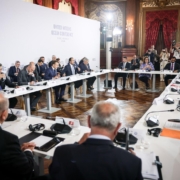
panel on stage with speaker during the 2025 paths that last sustainable Tourism Conference in Croatia

WestMED’s Technical Group on Sustainable Tourism participates in the Interreg Tourism Conference ‘Paths that Last’

200 participants | 8 Programme Organisers | approx 90 Projects | 5 workshops

On 25–26 June 2025, the WestMED’s Technical Group on Sustainable Tourism through the National Hub for Malta (Stephanie Vella), participated in an event held in Split, Croatia, under the Mediterranean Multi-Programme Mechanism titled “Paths That Last – Collaborating for a Sustainable Tourism in the Mediterranean”.

Eight Interreg Programmes working together in the Mediterranean
Next to a wide range of stakeholders. this gathering brought together eight Interreg programmes working across the region including Interreg Euro-MED, Interreg Greece–Cyprus, Interreg Italy–Croatia, Interreg Italy–Slovenia, Interreg Italy–France Maritime, Interreg Italy–Malta, Interreg NEXT Italie–Tunisie, and Interreg NEXT MED.

The goal of the Mediterranean Multi Programme Mechanism is to enhance synergy, coordination, and capitalisation among projects to address common challenges such as sustainable tourism, climate change, and socio-economic development in Mediterranean territories.

The event aimed to foster cross-programme coordination, share good practices, and promote the development of joint project ideas to advance sustainable tourism across the Mediterranean. It created an opportunity for stakeholders to align efforts around shared goals while responding to regional challenges.

Five workshops
Central to the conference were 5 different interactive workshops addressing critical themes for sustainable tourism: Shared and Strategic Governance of the Tourism Offer, Tourism and Green Transition, Inclusive and Accessible Tourism and Innovative Tourism Products

Workshop ‘Shared and Strategic Governance’
The WestMED Technical Group took part in the workshop on Shared and Strategic Governance. Through interactive exercises like the “Imaginary Planet” visioning workshop, the event encouraged creative thinking about future sustainable tourism models, including cross-border governance, local engagement, and sustainable visitor management.

The workshops facilitated the early formation of ideas for joint project proposals, which were later shared during the event’s closing plenary session. Some of the project ideas which were discussed include the application of carrying capacity models particularly in congested areas of tourism, the attraction of tourism in rural areas as a means of spreading the impact of tourism as well as the importance of training to operators in the sectors as well as tourists in order to encourage both the supply and demand of sustainable tourism.

During the workshop, the objectives of the WestMED’s technical group on sustainable tourism were outlined highlighting that the group serves as a technical forum to discuss trends and opportunities towards sustainable tourism within the region and to provide support to participants to develop project ideas around the topics already set at EU level with regards to the tourism-related topics.

The importance of capitalisation was also stressed, highlighting the need to build on the results of past and ongoing projects to avoid duplication and maximise the impact of existing knowledge and tools. Also, emphasis was placed on the importance of ensuring access to region-specific funding opportunities, particularly those that include southern shore countries, to guarantee a balanced approach to sustainable tourism in the Mediterranean.

The event offered a valuable networking opportunity for a range of stakeholders. It was instrumental in reinforcing cooperation, sharing innovation, and building a more cohesive approach to sustainable tourism in the Mediterranean—one that lasts.


Check the event announcement (including agenda)

See below for the Conference recording of the 1st day of this conference.

For more information contact Stephanie Vella: malta@westmed-initiative.eu 


people seated at a round table during workshop at the 2025 Interreg Sustainable Tourism Conference in Split Croatia

Photo Source: ASCAME

Recording of the Concerence: Paths That Last – Collaborating for a sustainable tourism in the Mediterranean
meeting with people seated at table against a United Nations Ocean Conference backdrop

UNOC3 Summit ‘For a More Connected Mediterranean’

On 9 June 2025, the Heads of State and Government and high representatives of Croatia, Cyprus, Greece, Italy, Libya, Malta, Morocco, Portugal, Tunisia and the EU on the invitation of the President of the French Republic, gathered at the summit “For a More Connected Mediterranean”, on the sidelines of the third United Nations Ocean Conference.

The meeting also brought together representatives of international organisations, development banks and large companies.

In view of common challenges in the Mediterranean, the Heads of State and Government decided to strengthen their cooperation and work towards shared and sustainable prosperity through a greater maritime, land and digital connectivity between Europe, the Mediterranean and the Gulf.

The Mediterranean Sea accounts for 25% of global maritime traffic and is at the heart of commercial, energy and digital exchanges. In this intense traffic area, States have raised the level of protection of the sea through regulation of transport in the Gulf of Lion a well as the creation of a low-sulphur emission zone, known as SECA zone, which encompasses the entire Mediterranean Sea. The latter was established on 1 May 2025 following the approval of the International Maritime Organisation.

The European Commission recalled that, as part of the Global Gateway strategy in the Middle East and North Africa, the European Union’s support reached €5.9 billion, which is expected to mobilise up to €27.2 billion in private and public investments. Commissioner Šuica also presented the objectives of the upcoming New Pact for the Mediterranean, which aims to strengthen partnerships between the European Union and the countries in the Mediterranean region, based on mutual interests.

Extensive bilateral and regional partnerships were announced for the development of new land and sea connections, the decarbonisation of ports and the deployment of new submarine cables. The participants discussed common objectives to ensure:

1) Decarbonisation of the maritime sector and major Mediterranean ports.

As part of a joint statement, the Mediterranean ports of Algesiras, Beirut and Marseille, announced the creation of a working group contributing to the reduction of shipping’s greenhouse gas emissions by providing ships with onshore power connections in ports while developing infrastructure for supply of alternative fuels and fostering rail or river onward transport towards the hinterland, as well as studying opportunities for new green corridors in the Mediterranean. All Mediterranean ports will be welcome to join the coalition before the COP24 of the Barcelona Convention (Cairo, December 2025). Croatia also announced the launch of its new Rijeka Gateway, green and fully automated, within the port of Rijeka, the most important Croatian port situated on three EU corridors.

2) Strengthening of maritime and land routes for transport of goods and green energy.

France and the European Commission, within the framework of the Global Gateway strategy and the New Pact for the Mediterranean, reiterated their support for the implementation of the India Middle East Europe Corridor (IMEC), including the mobilisation of Global Gateway funding to launch feasibilitystudies for this corridor. France reiterated its support for Egypt’s accession to IMEC, which aims to strengthen connectivity between East and West.

On 30 May 2025, France organised the first IMEC Sherpa meeting since the signature of the Memorandum of Understanding in September 2023. During this meeting, the participants reaffirmed their strong support for the project, as well as the need to consolidate IMEC’s governance while mobilising companies in the strategic sectors concerned. This same group has been invited by the European Commission to meet again, on the sidelines of the Global Gateway Forum to be held in Brussels on 9 and 10 October.

On energy connectivity between Europe and the Gulf, ACWA Power reaffirmed its commitment to convene a private-sector working group alongside leading European energy companies (including partners from France, Germany, Italy and Greece) to explore and develop joint projects in green hydrogen, renewable energy exports and related infrastructure, such as electrical interconnections. This collaborative framework will pave the way for clearer energy flows and the necessary investments under the IMEC corridor.

The Commission also stated the importance of advancing clean energy connectivity with North Africa, notably through the emerging T-MED Initiative, which supports renewable energy investment and infrastructure development across the Mediterranean.

In the Eastern Mediterranean, Greece and Cyprus recalled the implementation of large renewable energy interconnection projects, such as the “GREGY” project, a 950-kilometre submarine cable with a capacity of 3 GW which aims to interconnect Egypt and Greece, or the “Great Sea Interconnector” (GSI), bridging Europe and Middle East with clean energy.

3) Increased digital connections between the Mediterranean and the Gulf.

The participants presented EU’s flagship “Medusa/GEANT” Submarine Cable System initiative, which will not only link the two shores of the Mediterranean, but also Southern Mediterranean countries among themselves, by manufacturing and deploying a submarine cable system based on the most recent technological advancements in fibre optics communications, fully based on European leading-edge technology. It will also contribute addressing the digital divide with partner countries. The network is led by the company AFR-IX telecom, with the support of the Orange Group and the European Union, while Alcatel Submarine Networks (ASN) and Elettra Tlc are responsible for its deployment.

Other major initiatives are already currently contributing to the digital influence of the region, such as the Aqaba Digital Hub, which was inaugurated in 2023 and is one of the largest technological centres in the Near East.

Source: https://www.elysee.fr/en/emmanuel-macron/2025/06/09/joint-press-release-summit-for-a-more-connected-mediterranean