Articles

family phot sea basin strategies team at the Macro-regional and Sea Basin Strategies Days in Brussels July 2026

European Strategies Days 2026: Connecting Regions, Skills and Blue Economy Priorities

Brussels – Cooperation has long underpinned European territorial policy. At this year’s EU Macro-Regional and Sea Basin Strategies Days, the focus shifted from strategy to delivery.

Held on 8–9 July, the third edition of the event brought together policymakers, regional authorities and practitioners to strengthen cooperation among Europe’s four Macro-Regional Strategies – the EU Strategy for the Baltic Sea Region (EUSBSR), Danube (EUSDR), Adriatic-Ionian (EUSAIR) and Alpine Region (EUSALP) – and its four Sea Basin initiatives: the Atlantic Maritime Strategy, the WestMED Initiative, the Common Maritime Agenda for the Black Sea and the Greater North Sea Basin Initiative (GNSBI).

Against the backdrop of discussions on the EU’s post-2027 budget, the event highlighted how these frameworks are increasingly supporting resilience, competitiveness and the sustainable blue economy.

A milestone for Europe’s Sea Basins

For the first time, the four Sea Basin initiatives shared a stand in the Networking Village under the banner « From Strategy to Action: the EU Sea Basin Strategies. »

The stand showcased projects from across Europe’s maritime regions, encouraging exchanges between policymakers, project partners and stakeholders. Visitors also viewed the new EU Sea Basins video and a photographic exhibition highlighting initiatives in blue economy development, maritime innovation, environmental protection, blue skills and regional cooperation.

Blue Skills in the spotlight

One of the best-attended side events on the opening day focused on Blue Skills, as part of the workshop on social sustainability for the green and digital transition.

Co-moderated by Matteo Bocci, Deputy Team Leader of the EU Sea Basins Assistance Mechanism, and Elise Wattrelot of the Conference of Peripheral Maritime Regions (CPMR), the interactive session explored how cooperation between education, research and industry can help prepare the workforce for the green and digital transitions.

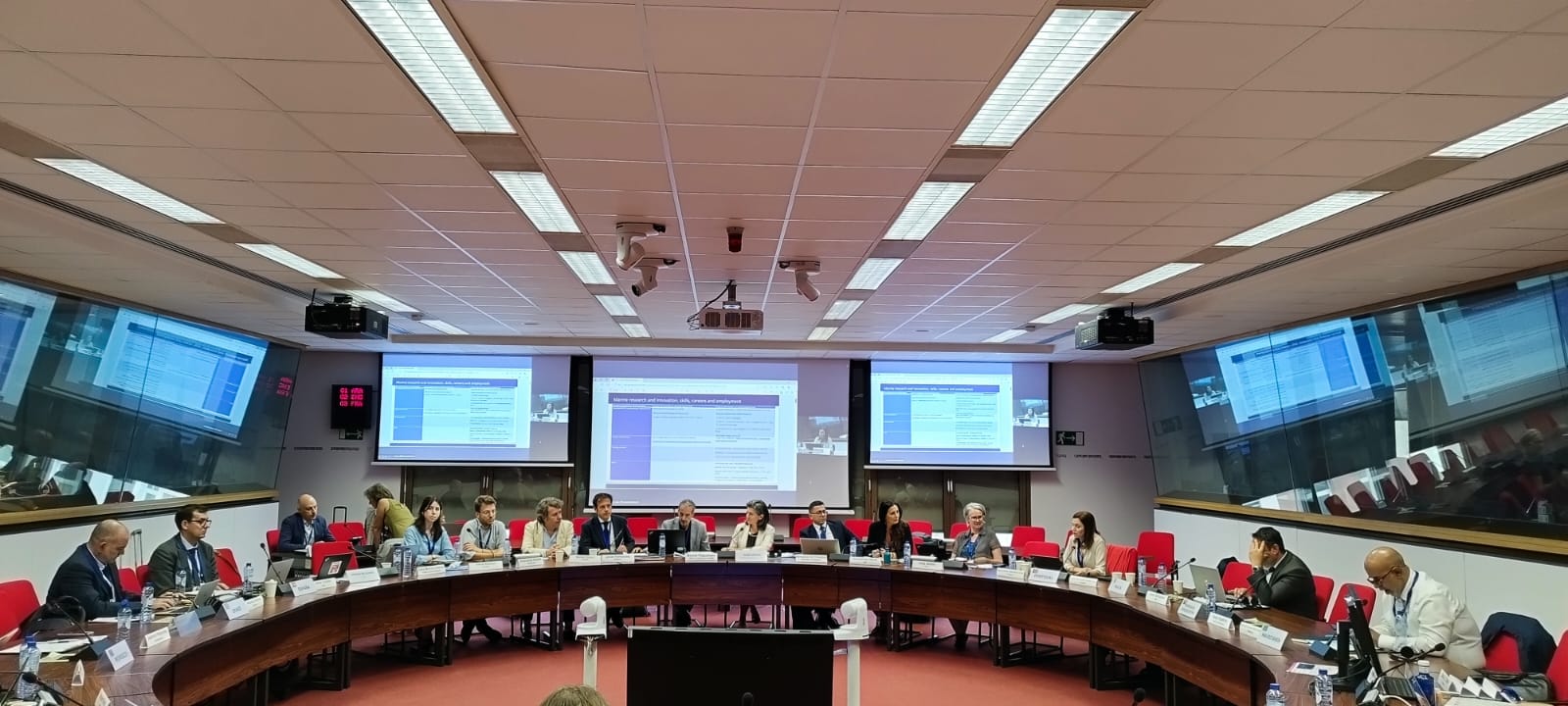
group of people brainstorming seated in circle during social sustainability workshop at the macro-regional and sea basin strategies days 2026


The discussion also showcased the WestMED Technical Group on Blue Skills, a new initiative bringing together experts and national representatives to strengthen cooperation on education, training and employment across the sustainable blue economy.


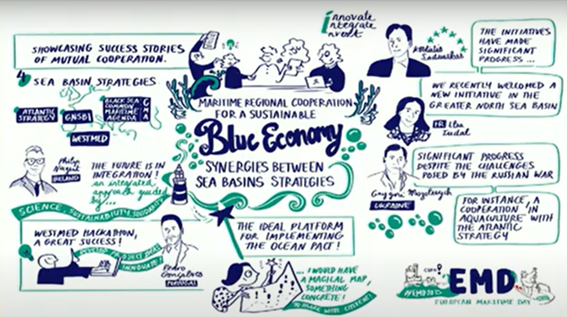
cartoon to illustrate the key points from the social sustainbility workshop at the Macro-regional and sea basin strategies Days 2026


Building stronger synergies

On the second day, the panel « Further synergies among the Macro-Regional and Sea Basin Strategies: Cooperation potential at the thematic level, » was co-moderated by Matteo Bocci from the EU Sea Basins Assistance Mechanism and  Robert Lichtner, Danube Strategy Point Coordinator for the EU Strategy for the Danube Region (EUSDR).

Bringing together experts and National Hubs from the Atlantic, WestMED and Black Sea regions, alongside representatives of the four Macro-Regional Strategies, the discussion examined practical opportunities for collaboration in areas including green shipping, maritime spatial planning, renewable energy, sustainable tourism, maritime clusters, investment and SME development.

Rather than focusing solely on governance structures, the session highlighted how stronger thematic cooperation can help capitalise on successful projects, increase stakeholder engagement and support the implementation of European policy priorities across sea basins and macro-regions.

Group of peoploe on stage during the synergies workshop at the EU Macro0regional and sea basin strategies days

Looking ahead

The 2026 Strategies Days demonstrated how Europe’s Macro-Regional and Sea Basin Strategies are evolving from coordination platforms into practical delivery mechanisms for European priorities.

The discussions in Brussels will continue beyond the event itself. Technical Groups, National Events and Regional Sea Basin Workshops provide valuable opportunities for Sea Basin and Macro-Regional experts to build on the exchanges, deepen thematic cooperation and identify concrete areas for collaboration. These platforms help transform ideas discussed at European level into practical initiatives involving regions, stakeholders and project communities.

The next milestones will provide further opportunities to strengthen these connections, including the Atlantic–WestMED Conference in Las Palmas de Gran Canaria on 15–16 September 2026, and the Common Maritime Agenda (CMA) for the Black Sea Conference on 30 September 2026 in Burgas, Bulgaria. Both events will bring together stakeholders from their respective sea basins to address shared challenges, exchange knowledge and explore new opportunities for cooperation.

From the joint Sea Basin presence in the Networking Village to discussions on blue skills and thematic synergies, the event illustrated the growing value of cross-border partnerships. As Europe prepares its next programming period, stronger collaboration between regions and sea basins will remain central to building a resilient, competitive and sustainable blue economy.

Download the concept note/ agenda for this Synergies session here

Visit the Macro-regional and Sea Basin Strategies days website

Photos copyright: EUinmy region

panel with expert women seated on stage at the malta sustainability forum 2026

Women shaping the blue economy in the spotlight at Malta Sustainability Forum 2026

The  Malta Sustainability Forum (MSF) 2026, organised by APS Bank, brought together experts to explore the growing role of women in the blue economy and the opportunities for greater inclusion across Malta’s maritime sectors.

The discussion examined the challenges and possibilities facing women in industries ranging from maritime transport and innovation to the circular use of marine resources, highlighting the importance of diverse leadership in building a more sustainable and resilient future.

Among the keynote speakers was Dr Stephanie Vella, WestMED National Hub Malta, who underscored the country’s vast maritime potential with the striking observation: « We have 12 times more territorial waters than we have land area. » Her address highlighted the strategic importance of Malta’s marine resources and the need to ensure that women play a central role in shaping the future of the blue economy. The session encouraged meaningful dialogue on breaking down barriers while unlocking innovation and sustainable growth across the sector.

Rachael Blackburn, Head of Culture at APS Bank, emphasised that, « The transition towards a more sustainable blue economy is also an opportunity to reflect on who benefits from that progress. Through the Malta Sustainability Forum, we wanted to explore how greater inclusion can help ensure that women are empowered to shape the future of a sector that is so important to Malta. »

Next to Stepanie Vella and Rachael Blackburn you can hear the insights by:

  • Dr Claudia Vella Casagrande: Secretary General – Malta International Shipowners’Association
  • Ann Fenech: President, Comité Maritime International, partner and Head of Marine Litigation Department Fenech and Fenech Advocates, Co-founder Malta Maritime Forum
  • Shannon Weber, Chief Executive Officer and Strategic Director – Numinara
  • Dr Alexia Massa Gallucci: Managing Director and Founder – Blue EcoTech Ltd
  • Manya Russo: Marine Projects Manager – BirdLife Malta
  • Captain Alexia Fenech: President WISTA Malta
  • Matthew Swain, Head of Sustainability – APS Bank

Moderator of the panel discussion: Pauline Micallef: Chief Executive Officer – MaritimMT
Hosted by Leanne Bugeja: events manager – APS Bank

The full episode of Women in the Blue Economy is available to watch on YouTube or listen to on Spotify as part of the Malta Sustainability Forum’s commitment to helping audiences learn, engage and act.

Stephanie Vella presenting at the Women in Blue Economy event 2026

Italy-Malta event 2026 - people seated around a big square table

Joint WestMED Italy–Malta National Event Advances Blue Economy Cooperation in Rome

Rome, Italy | 11–12 June 2026 – Policymakers, researchers, investors, maritime businesses and innovation stakeholders from Italy and Malta gathered in Rome for the fourth edition of the Joint WestMED National Event, reaffirming their shared commitment to advancing a sustainable, innovative and connected blue economy across the Mediterranean, particularly towards the southern shore countries.

Organised under the WestMED Initiative, the two-day event focused on accelerating the deployment of mature maritime innovations, strengthening investment ecosystems and enhancing cooperation in strategic sectors including shipping, ports, offshore infrastructure, aquaculture, tourism and blue skills.

Accelerating innovation and investment

The opening day explored how high-readiness (TRL 8–9) research projects can move more rapidly from demonstration to commercial deployment by connecting innovators with investors, public authorities, development agencies and industry. Discussions also highlighted opportunities for closer Italy–Malta cooperation on decarbonisation, digitalisation, maritime security and infrastructure development. As highlighted by the event organisers, the gathering sought to bring together « national institutions, research bodies, investors and maritime stakeholders from both countries for two days of targeted cooperation » while helping to « shape the next wave of blue innovation. »

Building skills for the future

The second day focused on developing the human capital needed to sustain the Mediterranean’s blue economy. Universities, vocational education and training providers, research institutes and managing authorities exchanged experiences on strengthening Blue Skills networks and improving access to funding opportunities.

The goal was to gather Italian and Maltese stakeholders around their relevant national representatives within the Technical Group on Blue Skills, also in order to convey coordinated inputs from the ecosystem.

The programme concluded with a roundtable on how the outcomes of WestMED Technical Groups can contribute to future INTERREG programmes and strengthen collaboration across maritime clusters. Reflecting on the discussions, participants emphasised that « a stronger Blue Economy requires a coordinated innovation and investment pipeline: cutting administrative burdens and uniting banks, authorities, test-bed operators, and accelerators to bring solutions to market faster. »

Strengthening regional cooperation

The joint WestMED Italy–Malta National Event once again demonstrated the value of regional cooperation in addressing common environmental, technological and economic challenges across the Mediterranean.

The two national hubs will undertake an initiative to promote cross-border joint ventures, also as a way to enrich the Maltese and Italian ecosystems with a larger number of stakeholders, in the fields where each country wants to fill its existing gaps.

By fostering dialogue between governments, academia, industry and investors, the initiative continues to build practical partnerships capable of translating research into market-ready solutions while supporting the transition towards a greener, more resilient and competitive maritime economy.

With its growing network of stakeholders and continued focus on innovation, investment and skills, the annual Italy–Malta gathering has become an important milestone in advancing the objectives of the WestMED Initiative.

Agenda

For more information, mail Leonardo Manzari WestMED National Hub Italy | Stephanie Vella WestMED National Hub Malta


2025 project awards winners on stage at the WestMED 2025 Conference

Tunis hosts the 5th WestMED Stakeholder Conference: Driving Blue Economy Action Across the Western Mediterranean

On 28 November 2025, over 200 stakeholders from both shores of the Mediterranean gathered in Tunis, Tunisia, for the 5th WestMED Stakeholder Conference – a flagship event of the WestMED Initiative.

Building on previous editions in Barcelona, Algiers, Rome, and Malta, this year’s conference highlighted the role of maritime clusters, blue skills, ocean literacy, energy transition, and maritime spatial planning in promoting a more competitive, sustainable, and resilient blue economy across the Western Mediterranean sea basin.

The conference was hosted by the Tunisian co-presidency of the WestMED and organized by the WestMED Assistance Mechanism, with the support of the European Commission.

Recognizing Excellence: WestMED Project Awards 2025

A highlight of the conference was the announcement of the WestMED Project Awards, now in their third edition. These awards honor outstanding projects aligned with the WestMED priorities, providing winners with visibility and recognition across the Mediterranean blue economy community.

  • Award winners showcased innovation in marine protected areas management, energy transition in fisheries and aquaculture, blue skills and maritime clusters, demonstrating how local initiatives can have a regional impact.
  • This recognition not only boosts the projects’ visibility but also strengthens cross‑border cooperation, encouraging replication of similar initiatives in other sea basins.

This edition showed a record number of 71 applications.  The award winners were:

  • BLUEPSOL: developing solar-powered solutions for sustainable fishing and aquaculture,
    reducing emissions and costs (also voted by participants as the ‘best-of-the-best’).
  • YEP MED: connecting training centres, ports, and companies across the Mediterranean to align education with real labour market needs
  • MPA4Change: empowering Mediterranean MPAs to adapt, build resilience, and combat climate change.
  • BCThubs: building technology excellence hubs, advancing  underwater cultural heritage and sustainable blue economy 
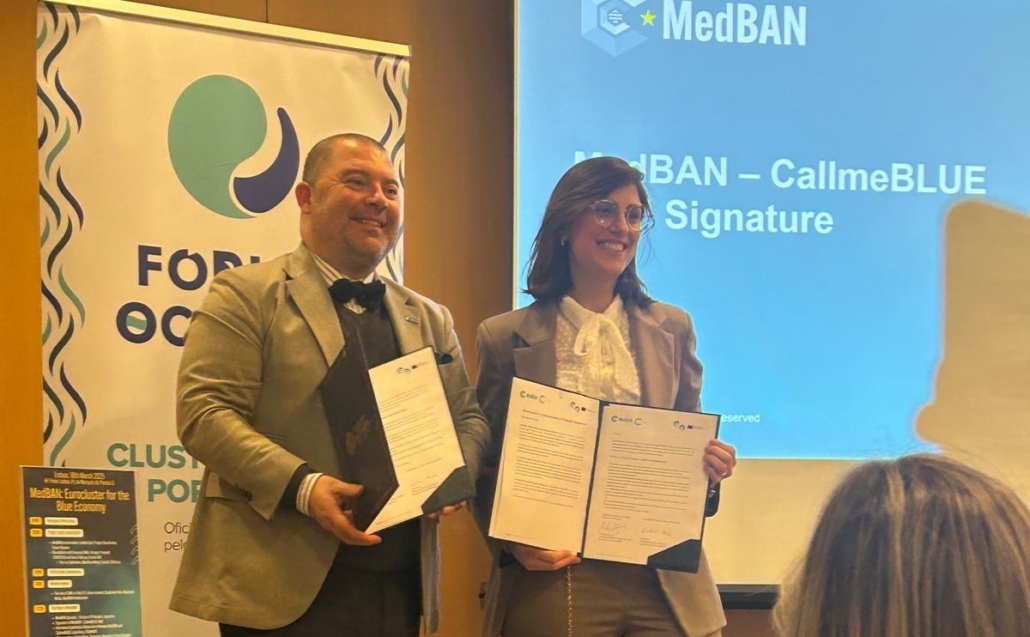
  • CallmeBlue: strengthening Mediterranean clusters, fostering cooperation, empowering communities and enhancing skills inclusively.

European Ocean Pact & new Pact for the Mediterranean

Two major policy frameworks were discussed during the conference:

  • EU Ocean Pact: presented as a unifying framework to safeguard Europe’s seas, it emphasizes sustainability, resilience, and innovation. The conference explored how WestMED priorities support this broader EU agenda.
  • Pact for the Mediterranean: recently launched, this pact aims to align Mediterranean countries around shared commitments for a resilient and sustainable sea basin. The WestMED Assistance Mechanism was highlighted as a bridge between the pact’s ambitions and concrete project implementation.

Together, these pacts signal a new era of Mediterranean maritime cooperation, linking regional action to European strategies.

Launch of the Blue Skills Technical Stakeholder Group
Recognizing that skills gaps are among the biggest barriers to a thriving blue economy, the conference announced the creation of a new technical stakeholder group on Blue Skills.

  • This group will bring together experts from the different Western Mediterranean countries to map skill needs, organise training programs, and promote ocean literacy.
  • It will serve as a platform for universities, training centers, industry, and policymakers to coordinate efforts.
  • By focusing on capacity building, the group aims to ensure that the Western Mediterranean workforce is equipped to drive the energy transition, innovation, digitalization and maritime spatial planning.

Looking Ahead

The 2025 WestMED Stakeholder Conference delivered three clear outcomes:

  1. Celebration of award‑winning projects that exemplify innovation and cooperation.
  2. Integration of the EU Ocean Pact and the Pact for the Mediterranean into WestMED’s operational agenda.
  3. Launch of a technical stakeholder group on Blue Skills, setting the stage for long‑term workforce development.

Together, these outcomes reinforce the WestMED Initiative’s role as a catalyst for sustainable growth, resilience, and collaboration across the Western Mediterranean and beyond. Next year’s co-presidency will be taken over by Spain and Tunisia, in line with the rotating governance structure of the WestMED Initiative.

A WestMED steering committee meeting preceded the conference, engaging participating countries and the European Commission in discussions on progress and next steps under the initiative.

Conference report

Download the comprehensive conference report.

Tunisian startup BluePsol demonstrating a motor at the WestMED Conference 2025 in Tunis

People listeninbg at the WestMED stakeholder conference 2025

man holding phone with checkmark in display - sea in the background.

SURVEY – Help shape the future of Mediterranean initiatives supported by the EU

As part of the implementation of the WestMED Initiative, we invite project beneficiaries to share insights and experiences through this short survey.

Project beneficiairies are those organizations, institutions, or groups that receive or have received direct support or funding for projects in the Western Mediterranean through funding under EU programmes such as EMFAF, Horizon Europe, INTERREG and others.

Your input is essential to assess the coverage, availability, and ongoing relevance of EU-funded programmes and to improve their design and implementation.

By contributing, you will help us identify lessons learned and shape future sustainable blue economy initiatives in the Mediterranean, ensuring they meet the needs of diverse stakeholders—including participants from both EU and non-EU countries.

About the Survey

  • Duration: It will take less than 15 minutes to complete.
  • Confidentiality: All responses will be handled in strict compliance with data protection regulations and used only in aggregated and anonymous form.
  • Scope: You may base your answers on your experience with one or multiple EU-funded projects.

The questionnaire is structured around 6 Sections:

  1. Introduction
  2. Access to funding
  3. Project results and impact
  4. Networks and consortium building
  5. Understanding the barriers in cross-national and sea basin cooperation
  6. Follow-up and continuation of projects.

The survey will remain open until the end of February 2026.

On behalf of the European Climate, Infrastructure and Environment Executive Agency (CINEA), thank you for your time and valuable contribution.

aquaculture

New Study: Climate Change Adaptation in EU Aquaculture

The European Commission has published a comprehensive study on climate change adaptation in EU aquaculture, providing a timely assessment of the sector’s vulnerabilities, challenges, and opportunities in the face of a changing climate.

Aquaculture is a vital part of Europe’s blue economy, supplying healthy food, supporting coastal communities, and contributing to economic growth. However, the sector is increasingly exposed to climate-related risks such as rising sea temperatures, ocean acidification, extreme weather events, and shifting disease patterns.

Adapting EU aquaculture to climate change is essential for safeguarding food security, jobs, and the health of marine and freshwater ecosystems. The report highlights the importance of collaboration between industry, researchers, and policymakers to accelerate the uptake of adaptation measures and ensure the long-term sustainability of the sector.

Marta Pascual, Stephanie Vella moderating the session on

WestMED highlights the importance of Tourism Indicators at the International Sun&Blue Congress 2025

On 19 and 20 November 2025, the Sun&Blue Congress brought together 832 professionals, 37 guest countries, 21 round tables, and 123 speakers, confirming the growth and global dimension of this international congress focused on Tourism and the Blue Economy.

This third edition of the Sun & Blue Congress developed a scientific programme with 11 side events – 45% of them international – which served as spaces for cooperation and knowledge transfer.

WestMED at Sun&Blue 2025
The WestMED Assistance Mechanism has played a central role at the Sun&Blue Congress ever since its launch in 2023 as an official partner, with Marta Pascual acting as a moderator, panellist and a member of the Advisory Board, representing Spain as the National Hub for the WestMED Initiative as well as the coordinator of WestMED’s Technical Group on Sustainable Tourism.

During the conference there were three events where Marta Pascual was active on behalf of the WestMED Initiative:

  • As a panellist during the side event: Interreg projects in Blue Economy: present and future – on  good practices in the blue economy promoted by Interreg MMM, with high potential for scalability and/or replicability in the Mediterranean and other EU regions
  • As a moderator of a high level panel titled Europe’s Advances Towards Sustainability in Tourism – A political and strategic vision of sustainable European tourism – analysing Europe’s strategic role in transforming tourism towards more sustainable models, linked to the Green Deal, the Digital Agenda, and the Next Generation Funds
  • As an organiser of WestMED’s side event on Tourism Indicators

Marta Pascual speaking at the sun&blue congress 2025

Tourism Indicators – a WestMED side event
As in previous editions, the WestMED organised a side event for stakeholders during the Congress.

The topic of this year’s side event was the importance of  Tourism Indicators. It was co-organised with Stephanie Vella from WestMED’s  Maltese National Hub (also coordinator of WestMED’s technical Group on Sustainable Tourism), and Alessandro Pititto from the Blue Economy observatory.

The objective of the workshop titled ‘Blue Tourism Indicators: Sailing towards common approaches‘ was to share knowledge about and experience the types of tourism indicators that currently exist, how they differ, and what they have in common.

The session was opened by framing the purpose of the workshop and introducing the need for comparable, robust tourism indicators to set the stage for technical exchanges among researchers, statisticians, economists, and data specialists (watch the presentation slides that were used for the opening)

Participants were able to share solutions/methodologies to collaborate on a common solution for all. MENTIMETER was used as a tool to gather instant feedback from participants: resulting in graphs like these:

Graph.displaying most pressing challenges for tourist destinations


graph displaying tourism intensity reflecting pressure on communities

The discussion with the audience focused on how to address indicators for two main tourism topics: Tourism Seasonality and Tourism Intensity.

Participants associated tourism seasonality with challenges like overcrowding, fluctuating demand, especially during holidays, and precarious work conditions. They highlighted the pressure seasonality puts on destinations and noted weak promotion as a related factor.

There was strong consensus on the critical importance of indicators for managing sustainable tourism effectively. Many emphasized that robust indicators are crucial for developing real solutions and balancing the social, economic, and environmental aspects of tourism.


For more information contact Marta Pascual (WestMED National Hub Spain) or Stephanie Vella (westMED National Hub Malta)

More on the 2024 WestMED Contribution: An international showcase of sustainable initiatives and the launch of WestMED’s Sustainable Tourism Technical Group


WestMED Mauritanie au Sommet Atlantique, Marine, Energie et Support Industriel 2025

Le Sommet Atlantique, Marine, Energie et Support Industriel (AMEISS), organisé Conjointement par Oneport et la Fédération Nationale de l’Industrie, des Mines et de l’Energie s’est tenu à Nouakchott, à l’hôtel Fasq les 28 et 29 Octobre 2025 et a connu la participation de plusieurs acteurs industriels, institutionnels, de la recherche et des experts de la Mauritanie et de l’Espagne pour discuter les opportunités de partenariats dans le domaine du développement énergétique et maritime entre les Canaries et la Mauritanie.

Le Hub National de la Mauritanie a participé activement en tant que paneliste au Panel Economie Bleue, Gouvernance Et Collaboration « Réponse aux urgences maritimes, efforts et collaboration de l’économie bleue en Mauritanie ».

Au cours de ces interventions, Dr. Mohamed Lemine Abdel Hamid, Hub National de la Mauritanie a tout d’abord présenté l’Initiative WestMED de l’Union Européenne, son historique, ses objectifs, ses membres et la structure de son mécanisme d’assistance. Il a rappelé que la Mauritanie a eu la chance de co-présidé l’initiative en 2022 et 2023. Dans un deuxième temps, il a présenté les principales réalisations du Hub National dans le domaine de la promotion de l’économie bleue en Mauritanie, dont entre autres, l’organisation de six évènements nationaux dédiés entre 2019 et 2025, la création du cluster maritime mauritanien qui fédère les principaux acteurs de la mer, l’institutionnalisation d’un poste de Conseiller Technique en Charge de l’Economie Bleue et des Affaires Maritimes au niveau du Ministère de la Pêche et des Infrastructures Maritimes et Portuaires. Il a ainsi rappelé que les efforts de l’Initiative WestMED en Mauritanie ont inspiré les autres partenaires en Mauritanie.

Dans ce cadre il a cité la Banque Mondiale qui prépare actuellement un grand projet WACA+ qui devrait comprendre un volet dédié à la promotion de l’économie bleue en Mauritanie. De même, la BIE vient de signer une convention de prêt de 20 millions d’euro avec une Banque mauritanienne (BEA- Al AMANA) destinée au financement des projets dans le domaine de l’économie bleue en Mauritanie.

L’intervention du Hub National de la Mauritanie a siccité beaucoup d’intérêt de la part des participants.

En marge de cet évènement, le Hub National de la Mauritanie a rencontré le Cluster Maritime des Canaries pour discuter des opportunités de collaboration.

Pour plus d’informations, veuillez contacter le centre national WestMED Mauritanie (Mohamed Lemine) : mauritania@westmed-initiative.ec.europa.eu


Mohamed Lemine at the Ameis Summit 2025 - one-on-one meeting with a colleague

Copyright photos: Ameis Summit 2025


DTF25 conference sign with cruise ship in background

DTF 2025 Conference hosted in Malta: Driving the Future of Sustainable Maritime Transport

The 2025 edition of the Decarbonizing the Future (DTF) conference was held in Malta on 16–17 October, bringing together international experts, policymakers, and industry leaders under the theme “Ports. Power. Partnerships.” The conference served as a key platform for advancing dialogue on sustainable transport, digitalisation, and the decarbonisation of maritime operations in particular through the provision of Onshore Power Supply (OPS).

Organised by EOPSA, Transport Malta and Med Ports Association, the two-day event underscored the growing importance of OPS as a pivotal technology to reduce emissions in ports and align with the EU Green Deal, Fit for 55, and TEN-T objectives. Participants explored pathways to achieve cleaner, more efficient port operations and strengthen collaboration among national and regional maritime authorities.

WestMED at DTF
As part of the DTF Conference, the WestMED Initiative hosted a dedicated side event on “Advancing Sustainable Transport through Onshore Power Supply”. Jointly organised by the WestMED National Hubs for Malta and Italy, the session highlighted the Mediterranean region’s pivotal role in advancing OPS as a tool for sustainable maritime transport.

The event brough together a diverse panel of stakeholders — including government and industry representatives, port authorities, NGOs, and cluster organisations — who discussed opportunities for collaboration, knowledge sharing, and access to EU and regional funding to scale up OPS implementation.

The discussion focused on:

  • How to scale up OPS across Mediterranean ports;
  • The role of EU and regional funding to support OPS implementation;
  • Cross-border cooperation and knowledge-sharing among ports in the WestMED region;
  • Addressing the policy, technical and investment challenges of decarbonising port operations.

On 17 October, Stephanie Vella (WestMED National Hub Malta) took to the main stage, where she spoke about the #MediterraneanPact that had just been launched, its relevance for regional cooperation on port decarbonisation and the supporting role of WestMED through its Technical Group on Green Shipping.

OPS Connection of MSC Explora II to OPS at Valletta’s port facility
A notable practical outcome during the conference was the connection of MSC Explora II to OPS at Valletta’s port facility, demonstrating the OPS connection. The occasion was marked during a high-level event attended by the Prime Minister of Malta and senior government officials.

MoU DTF and TÜRKLİM
Another key milestone of the DTF 2025 Conference was the signing of a Memorandum of Understanding (MoU) between DTF and TÜRKLİM, the association representing 78 private ports and terminals in Türkiye. TÜRKLİM plays a vital role in shaping container, cruise, and liquid bulk operations.

The MoU marks an important chapter in regional cooperation. It reflects DTF’s commitment to expanding its partnerships across the Mediterranean and strengthening the region’s collective capacity to meet climate and digital transformation goals.

The conference concluded with a call to action: to translate dialogue into implementation through concrete projects and collaborative frameworks. As the maritime sector continues its transition toward a low-carbon future, the partnerships and insights forged in Malta are expected to shape future developments across the Mediterranean and beyond.

Stephanie vella on the main stage presenting the westMED Initiative at DTF25


Pact for the med poster with people cheering

Pact for the Mediterranean Launched: A New Era of Regional Cooperation

On 16 October 2025, the European Commission officially launched the Pact for the Mediterranean – an ambitious framework to deepen cooperation between the EU and its Southern Mediterranean partners.

The Pact is the result of an extensive and inclusive consultation process that engaged a broad range of stakeholders, including southern Mediterranean partners, EU Member States and institutions, neighbouring countries in the wider region, as well as representatives from civil society, the private sector, academia, think tanks, and cultural and economic organisations.

Marking 30 years since the Barcelona Process, this initiative aims to build a “Common Mediterranean Space” rooted in co-ownership, co-creation, and joint responsibility.

Structured around three pillars – People, Economy, and Security -the Pact sets out over 100 concrete initiatives to drive inclusive growth, connectivity, and resilience across the region:

  • People: A flagship Mediterranean University, youth mobility schemes, and cultural exchange programmes will foster intergenerational ties and civil society engagement.
  • Economy: Projects like StartUp4Med and the Trans-Mediterranean Renewable Energy Initiative (T-MED) will boost clean tech, digital infrastructure, and sustainable blue economy development.
  • Security & Migration: Joint efforts on disaster preparedness, border management, and migration governance aim to enhance regional stability.

The Pact is open for engagement with partners beyond the Southern Mediterranean,including the Gulf, Sub-Saharan Africa, the Western Balkans as well as Türkiye. Stepping up cooperation between the EU, the Middle East and North Africa, and the Gulf region is a key objective.

An action plan is expected in early 2026 following political endorsement in November ’25 on the occasion of the 30th anniversary of the Barcelona process. Civil society, youth organizations, and regional bodies will be invited to support its implementation.


Dubravka Šuica, Commissioner for the Mediterranean:

 « The Pact is a clear testimony of a renewed focus and commitment of the EU to the Mediterranean region. This Pact is about people: the region’s greatest strength lies in its youth, its creativity, and its talent. The Pact is also about shared prosperity. It will bring new investment opportunities and jobs. We will also invest in security, preparedness and migration management. Close cooperation and co-ownership will make this a success story for our citizens on all shores of the Mare Nostrum. » 

Kaja Kallas, High Representative for Foreign Affairs and Security Policy/Vice-President of the European Commission

« The geopolitical importance of the Mediterranean cannot be overstated. The region connects three continents and acts as a bridge to the European Union for important exchanges amongst people, our economies and on security. With the new Pact for the Mediterranean we open a new chapter and a chance for more productive cooperation and lasting stability in the region. » 


Watch the press statement by Ursula von der Leyen, President of the European Commission

Watch the press conference opening remarks by Kaja Kallas, High Representative of the Union for Foreign Affairs and Security Policy and Vice-President of the European Commission

Watch the press Conference opening remarks by Dubravka ŠUICA, European Commissioner for the Mediterranean

More information:
Pact for the Mediterranean – One Sea, One Pact, One Future – a shared ambition for the region – Middle East, North Africa and the Gulf

The Pact for the Mediterranean – Middle East, North Africa and the Gulf