A sustainable Blue Economy requires support to promote and uptake innovation, knowledge, skills as well as access to finance, which is effective and locally-grounded. This is possible through joint actions promoted by socio-economic and institutional actors at local, national and subregional level.
In this respect, maritime clusters (a network of companies, organizations, and institutions involved in the maritime industry) play a crucial role to support local stakeholders active in the Blue Economy.
They do so by supporting innovative products and services, internationalisation of micro, small and medium enterprises, dissemination of new knowledge and skills and ultimately integration of sectoral policies at local and national levels. Maritime Clusters have therefore been growingly acknowledged as essential booster for innovation and diversification of the Blue Economy.
According to a study of the Union for the Mediterranean in 2019, the large majority of Maritime Clusters across the Mediterranean is based in EU countries: Italy, Spain, France. The western Mediterranean seems to be more prone to the promotion of innovation in the Blue Economy through the set-up of clusters: in the EU (mostly regional-level clusters) but also in African countries (mostly national-level clusters).
On a European level, the European Nework of Maritime Clusters (ENMC), has been established in 2023 as a platform for exchanging information and networking between the maritime Cluster organizations of European member states.
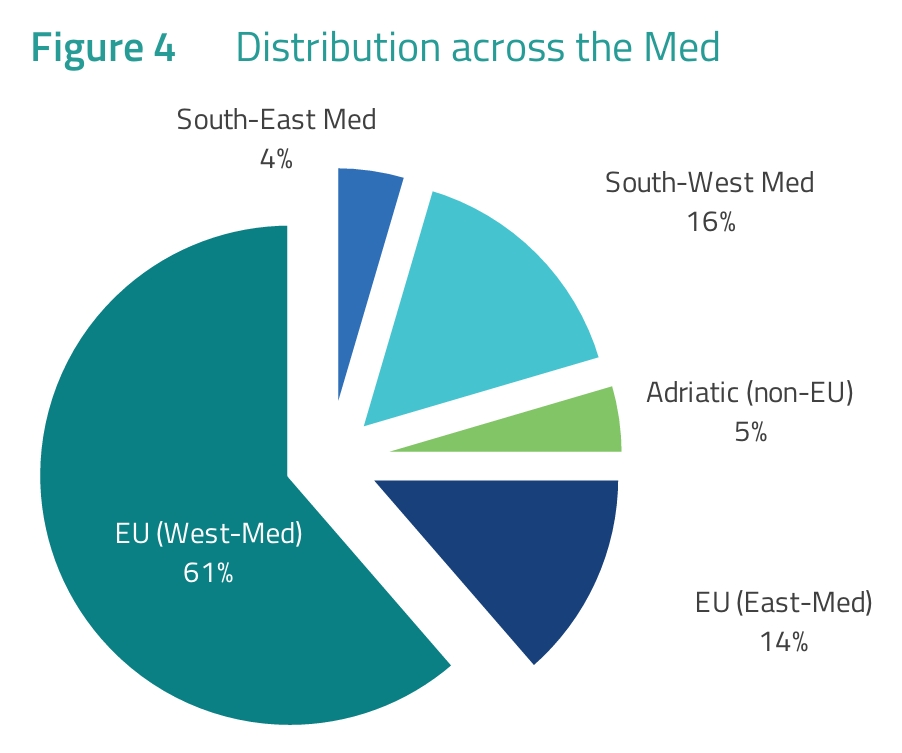 Source: UfM Secretariat – Maritime Clusters in the Mediterranean Region (pdf)
WestMED Maritime Cluster alliance
Since its inception in 2021, the WestMED Initiative, through the WestMED Maritime Cluster Alliance, supports strong alliances between the most active Maritime Clusters in the Western Mediterranean and beyond . This has included the launch of a new Maritime Cluster in Mauritania and the recently launched Libyan Maritime Cluster.
The key objectives of the Alliance are:
- Cluster dialogue: Support exchange of knowledge and practices across maritime and non-maritime clusters
- South-South cooperation: Boost the development of southern maritime clusters
- North-South capacity building: Upgrade cluster management skills
- Provide a platform for private investments in innovative SMEs
The Maritime Cluster Alliance has succesfully supported several project proposals that strengthen maritime clusters in order to secure funding. Next to MedBAN (COSME Euroclusters), these include for example: MARMED and MAQUAM (funded through ERASMUS+), ELBE Alliance (funded through IKAT), and Women in Blue Economy – WINBIG, Maritime Clusters CALLMEBLUE, Green Marine MED, and POWER4MED (funded through EMFAF).

MedBAN
The European MedBAN project, short for Mediterranean Blue Acceleration Network, is an initiative to empower small and medium-sized enterprises (SMEs) in the blue economy.
It was co-funded by the European Union (Grant Agreement nº 101074763) through the Joint Cluster Initiatives (EUROCLUSTERS) for Europe’s recovery (SMP-COSME-2021-CLUSTER) under the Single Market Programme with a total budget of 1.4 Million euro. The MedBAN project is therefore closely aligned with the Euroclusters’ specific objectives regarding networks, innovation, adoption of processes and technologies for the twin (digital & sustainable) transition, training for the up and re-skilling of the workforce and internationalisation of European SMEs.
MedBAN was managed by a consortium of six maritime cluster organizations from five different Mediterranean countries: Portugal, Italy, France, Greece and Spain. Its common mission: to drive innovation, accelerate sustainability and internationalise blue SMEs, to support the transition towards a thriving, resilient and sustainable blue economy.
Stage 1: laying the foundation
The initiative consisted of two stages. First, the Mediterranean blue economy ecosystem was mapped to identify key players, challenges, and opportunities. This ensured that the actions by MedBAN would generate maximum impact on sustainable blue economy growth in the region. It resulted in identifying the five most critical sectors that MedBAN would focus on: aquaculture, fisheries, tourism, ports and renewable energies. SMEs in these sectors were specifically targeted in the 2nd phase of the project.
Next to this,the coherence between the challenges found in each of the the abovementioned sectors and the national and regional policies of each partner country of the consortium (national Resilience Plans) was analysed to ensure alignment from that perspective as well.
This first stage also consisted of 2 short online training sessions for the cluster staff members of the participating cluster organisations, with an emphasis on challenges and needs for succesful projects and sharing best practices – which proved not only useful in the context of this project but also for dealing with members of each individual cluster organisation beyond the scope of this project.
Stage 2: support SMEs with technical assistance/ services
The second stage consisted of offering selected SMEs and startups a large set of services to boost their business, ranging from market research to international matchmaking. These services were offered by a pool of (mostly)pre-selected third parties that were funded by MedBAN in line with the awarded budget.
SMEs could apply for these services by submitting a specific project proposal via ‘cascade funding’ calls in two categories: 1) Innovation, training and twin transformation to allow for modernisation of the business processes and 2) ‘internationalisation’ to allow for growing their business across borders. Both the call texts and the subsequent selection of proposals was based on the findings generated during the first phase.
Results
57 proposals from 49 SMEs were awarded support, with eight SMEs being awarded support for 2 proposals (one in each category). This support totalled little over 1 Million Euro and consisted of organisations from 8 countries – mainly situated around the Mediterranean.
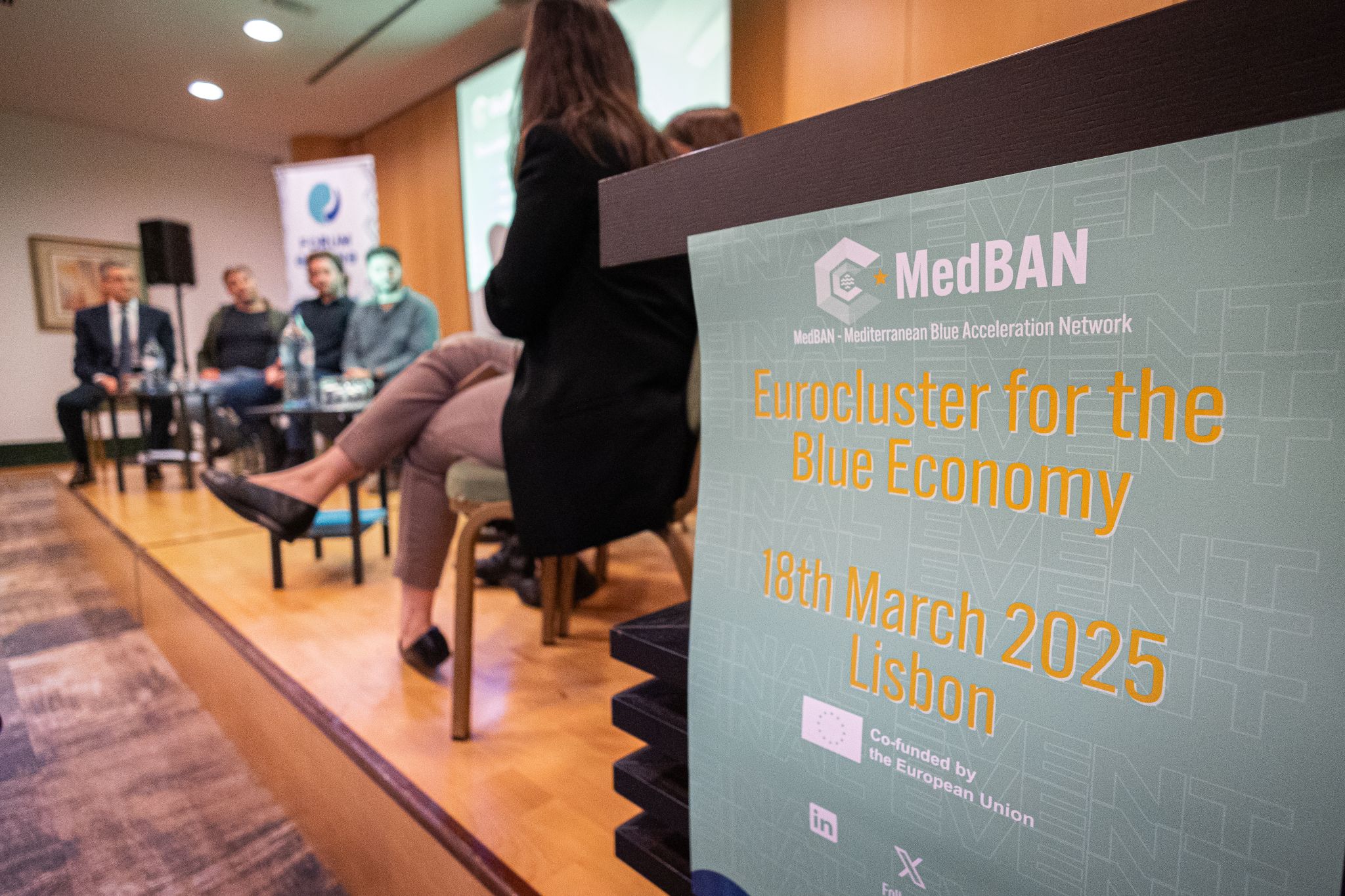
During MedBAN’s final conference in March 2025, some of these selected SMEs shared the impact of this project on their respective businesses:
Hydrotwin : a start-up specialised in underwater noise monitoring received MedBAN support regarding market and market penetration analysis to better explain its potential to investors and decision makers. It led a.o. to the identification of marine offshore renewables as a priority market.
Seaentia : a sustainable aquaculture startup. MedBAN allowed them to develop their export strategy to export their fish to other EU countries, keeping in mind that the long term strategy is to produce locally. One of the elements they focused on was EU regulatory compliance regarding hygiene and food safety in the transport of fresh fish
Cyclefi : an SME that develops software and hardware solutions to tackle, waste, energy and water challenges. MedBAN allowed them to expand the market from focusing primarly on municipalities to ports . This involved a.o. a comprehensive mapping of waste management within EU ports and Greece in specific, including the definition of an international matchmaking plan. They have now been able to start with Piraeus port, to tackle waste generated by its millions of (tourist) visitors.
Maritime world : a startup specialised in short conferences, workshops, B2B meetings and technical tours across Europe, dedicated to the maritime industry. MedBAN support allowed for significant (international) growth, especially by getting better connected to high quality organisations across the Mediterranean, including the North African countries. One of the actions was a thorough Market Analysis that provided a database with contacts of more than 130 organisations. Maritime World is now on the way to create one of the biggest maritime conferences in Malta by the end of the year.
PesCo : a start-up with an online platform focused on sustainable fishing tourism, matching local fishermen with tourists. Through the MedBAN support they managed boost their network with hotels, tour- and travel agencies. They also received support to develop toolkits for two key target groups: guides (captains) to help improve the sustainability viewpoint and clients (exploreres) to help prepare for the fishing experience.
The common denominator was that MedBAN allowed them to take steps that would’ve otherwise taken much longer to develop.
Watch the full panel discussion
Moving forward
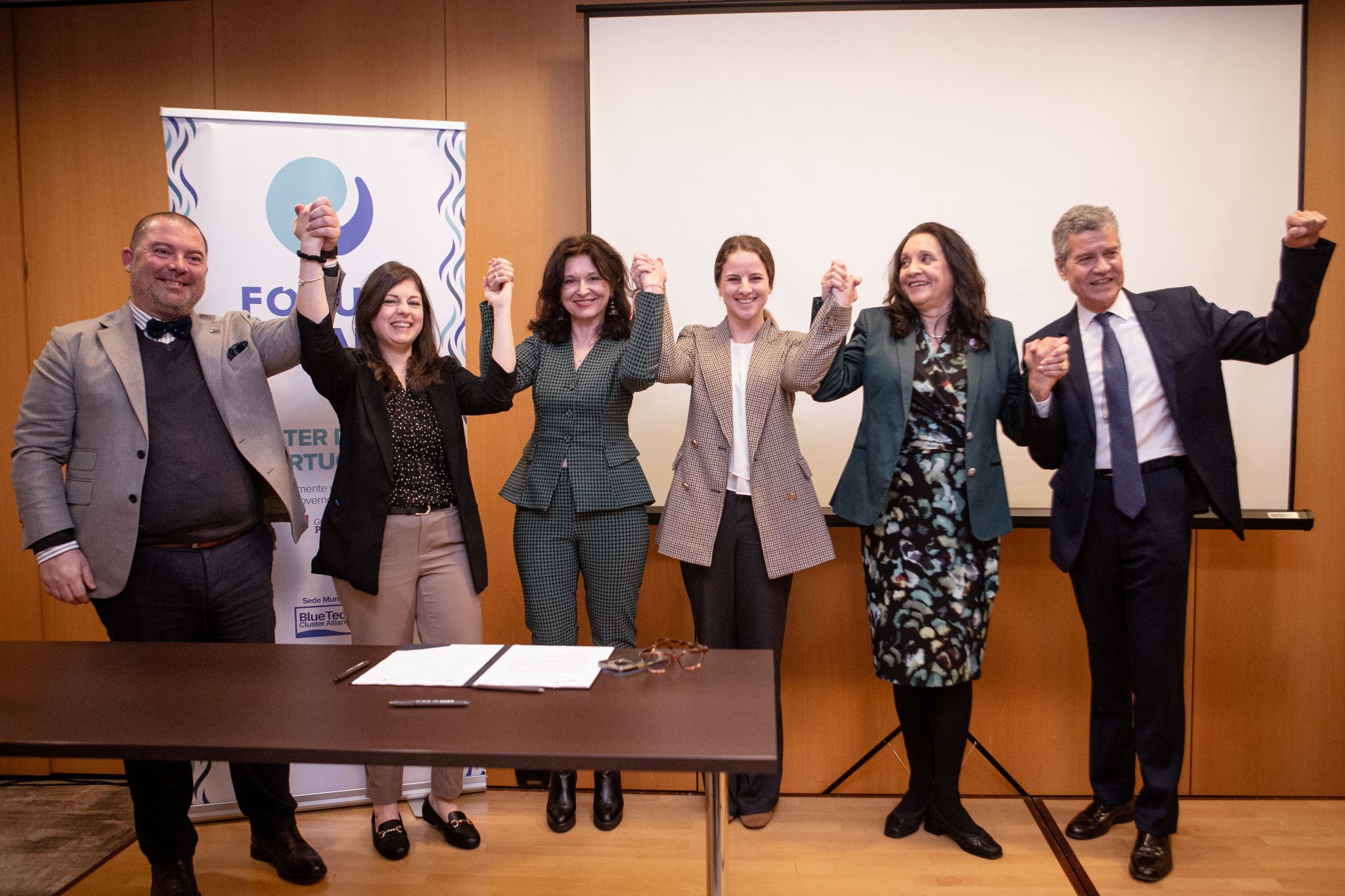
The consortium partners committed themselves to further build on MedBAN’s success. This was underlined by signing the MedBAN Statutes (charter of principles); in which partners pledge to explore new opportunities of collaboration, foster stronger collaboration among clusters, commit to ongoing exploration of funding opportunities, and ensure long-term sustainability.
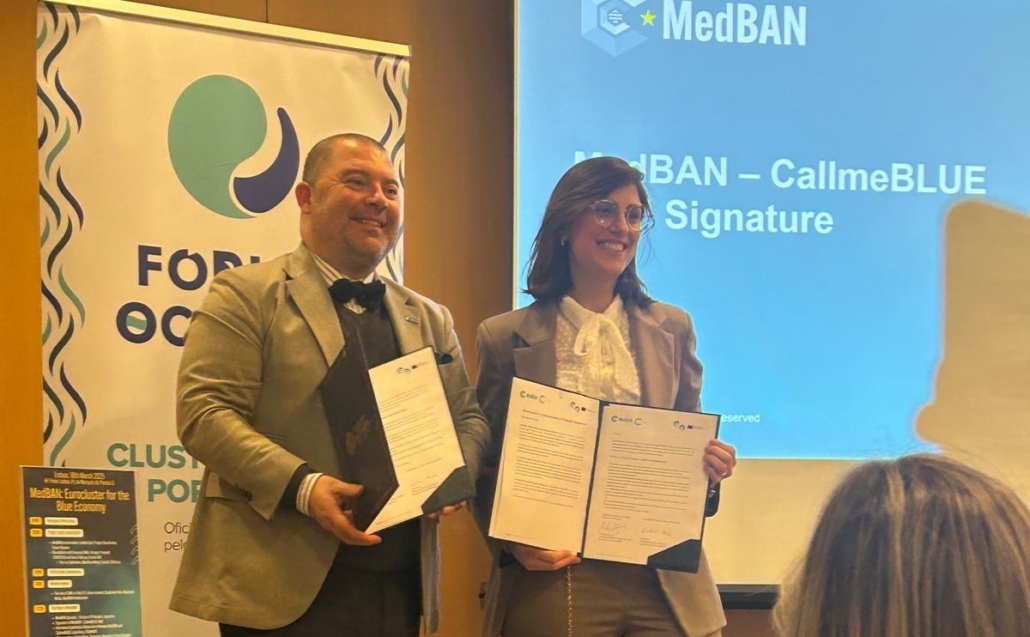
It was also underlined by signing a Memorandum Of Understanding for with CALLMEBLUE (Cluster Alliance Med Blue) to strengthen strategic collaboration.
WestMED connection
The initial idea for MedBAN was born in September 2021 at Seafuture in La Spezia and evolved through WestMED’s Maritime Clusters Alliance Technical Group into a successful submission for COSME funding. Next to this, Stephanie Vella (WestMED National Hub Malta) was an official ‘MedBAN ambassador’ and Lorella Ciutti (WestMED National Hub Portugal), MedBAN’s project coordinator. MedBAN has, in this respect, been supported by the WestMED Assistance Mechanism from start to finish.
At the end of the MedBAN conference, project leader Ruben Eiras summed it all up: “Here we are, celebrating Europe. When we look at the numbers, of course, [the project] is just a drop in the ocean—but it is an important drop. Today, the Blue Economy represents innovation, defence, and sustainability—connecting, aggregating, and linking. What we aim for in a few year’s time, when we have MedBAN 2.0, is that we have investment funds and private actors with more capital to invest in these SMEs to make them grow. Let’s triple these numbers and make the Blue Economy happen!”