Success Story. MPA4Change: Building Climate-Resilient Marine Protected Areas in the Mediterranean
The Mediterranean Sea is one of the European sea basins’ most vulnerable to climate change, warming significantly faster than the global average. Rising sea temperatures, biodiversity loss, habitat degradation, pollution, and overfishing are placing increasing pressure on marine ecosystems and the coastal communities that depend on them.
In response to these growing challenges, the MPA4Change project was launched to strengthen the role of Marine Protected Areas (MPAs) as effective ocean-based solutions for climate adaptation and resilience across the Mediterranean basin.
The project’s innovative approach and regional impact have been widely recognised, earning MPA4Change WestMED’s best project award in 2025, highlighting its contribution to advancing climate adaptation and sustainable marine conservation across the region.
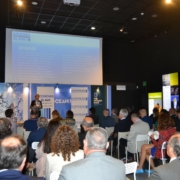
Watch the project pitch by Joaquim Garrabou during the WestMED Stakeholder Conference 2025 in Tunis (YouTube)

Building Collaboration Across the Region
Funded through the Interreg Euro-MED Programme and coordinated by the Spanish Research Council (CSIC), MPA4Change brings together a wide network of scientific institutions, conservation organisations, protected area managers, and policy experts from across Europe and the Mediterranean. Building on the foundations laid by earlier initiatives such as MPA-Adapt and MPA-Engage, the project focuses on transferring proven tools, methodologies, and expertise into practical action for MPA managers and decision-makers.
Turning Knowledge into Action
At the heart of the project is the development of a long-term Action Plan for Mediterranean MPAs. This includes improving climate risk assessment, monitoring systems, restoration practices, participatory governance, citizen science, and adaptation planning.
MPA4Change also supports policy dialogue at regional and European levels, helping align local conservation efforts with broader climate and biodiversity strategies. Training programmes, expert networks, and innovative digital tools are empowering managers to better understand climate vulnerabilities and implement effective adaptation measures on the ground.
MPA4Change Project coordinator Joaquim Garrabou explains:
“The toolkits to support the elaboration of MPA adaptation plan was developed during the MPA-Adapt project and later refined and successfully tested through MPA-Engage and MPA4Change across contrasted socio-ecological contexts. However, we realised that to scale-up we needed to define an operational but ambitious goal to support the integration of climate adaptation strategies in the Mediterranean marine protected areas network. This led us to create the 100MPA MedAlliance: acollaborative initiative aimed building a resilient network to face the climate change of at least 100 MPAs across the Mediterranean.”
Looking Ahead: The 100MPA MedAlliance
Although the project’s initial phase concluded in 2025, its long-term impact will continue through the expansion of the 100MPA MedAlliance. This initiative aims to engage 100 Mediterranean Marine Protected Areas (MPAs) by 2030, supporting them in implementing climate adaptation strategies and promoting the exchange of knowledge and best practices across borders.
Through continued collaboration, capacity building, and scientific innovation, the project is helping shape a more connected and resilient Mediterranean network of protected marine areas.
As climate pressures continue to intensify, MPA4Change demonstrates how cooperation, science, and nature-based solutions can work together to safeguard marine biodiversity while supporting sustainable coastal livelihoods for future generations.
EU’s support for Marine Protected Areas
The EU supports Marine Protected Areas (MPAs) through a combination of binding environmental legislation, strategic biodiversity targets and dedicated funding instruments. At policy level, MPAs are a core delivery mechanism for the EU Biodiversity Strategy for 2030, which aims to protect at least 30% of EU marine waters and ensure strict protection for at least 10%. This is reinforced by the Marine Strategy Framework Directive, which requires Member States to achieve or maintain “Good Environmental Status” of marine waters, and by the Habitats Directive and Birds Directive, which underpin the Natura 2000 network – the largest coordinated system of protected areas in the world, including extensive marine sites.
Financially, the EU supports MPAs through several funding streams that help turn policy goals into implementation. The European Maritime, Fisheries and Aquaculture Fund (EMFAF) provides targeted support for conservation, sustainable fisheries management and the protection of marine ecosystems within and around MPAs. The EU’s LIFE Programme co-finances environmental and climate projects, including Marine Protected Areas (MPAs).
Research and innovation funding through Horizon Europe supports scientific knowledge, monitoring systems and new tools for ecosystem-based management. In addition, cross-border cooperation programmes such as Interreg (including Interreg Euro-MED) fund practical collaboration between countries to improve governance, capacity building and on-the-ground management of MPAs, particularly in shared sea basins like the Mediterranean.
| More Info about MPA4Change | |
| Budget | Total: € 999,436
EU Contribution: € 799,549 |
| Partners/Countries | Coordinator/ lead: Spanish Research Council – Spain
Consortium of management of Portofino Marine Protected Area – Italy Public Institution Brijuni National Park – Croatia University of Vigo – Spain DAN Europe Foundation – Malta National Research Council (CNR) – Italy EUROPARC Federation – Spain University of Algarve – Portugal |
| Follow | Website
Social media: |
| Duration | 1 January 2024 – 31 March 2026 |
Additional materials
MPA4Change policy brief – FROM TOOLS TO ACTION
MPA4Change Climate Adaptation Factsheets
100MPA MedAlliance brochure
100MPA MedAlliance policy brief