Atlantic–WestMED Portuguese National Event Outcomes| Building blue skills and coastal resilience for the ocean’s future
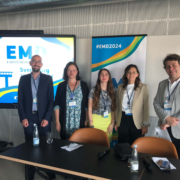
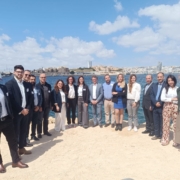
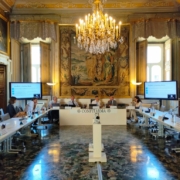
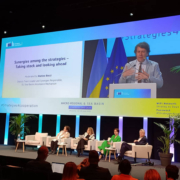
On 9 September 2026, the joint Atlantic–WestMED National Event “The Future of the Ocean Starts Here: Blue Skills & Coastal Resilience” took place at Templo da Poesia, in Oeiras, Portugal. The event brought together 80 participants from public authorities, education and training providers, research institutions and blue-economy organisations.
Organised in the framework of the Atlantic Maritime Strategy and the WestMED Initiative, the event explored an important question: what if the future of our ocean depends on the skills we build today? Discussions focused on two closely connected priorities: developing blue skills and ocean literacy, and strengthening ocean health and coastal resilience through science, innovation and cooperation.
Following opening remarks and a keynote on Portugal’s vision for cooperation under the EU Sea Basin Strategies, two thematic panels examined how knowledge, skills and technology can support a more competitive, sustainable and resilient blue economy. The first addressed Blue Skills and Ocean Literacy, while the second focused on Ocean Health and Coastal Resilience.
Key insights and topics discussed
1. Aligning blue skills with evolving sector needs
Participants highlighted the need to strengthen the connection between education and training providers, industry, and both emerging and traditional blue-economy activities. Practical training and learning experiences in real working environments were identified as important ways to ensure that qualifications respond to technological change, sustainability challenges and evolving labour-market needs.
This closer alignment should be accompanied by continued investment in reskilling and by efforts to attract younger generations to blue careers.
2. Making ocean literacy part of skills development
Ocean literacy was recognised as an essential component of blue-skills development. Beyond specialised technical training, improving society’s understanding of the ocean can encourage responsible behaviour, strengthen the connection between communities and the marine environment, and support young people in considering careers in blue-economy sectors.
3. Turning ocean data into actionable intelligence
The discussions showed how advances in ocean observation, forecasting, data and artificial intelligence can improve the understanding of coastal risks and support maritime spatial planning.
Transforming data into actionable intelligence can strengthen evidence-based decision-making, supporting environmental protection, sustainable blue-economy development and public policy.
4. Connecting knowledge with practical solutions
Participants stressed that responding to climate risks, marine litter and pressures on coastal ecosystems requires integrated solutions and greater coordination between public authorities, research institutions and economic actors.
Examples discussed during the event, including sustainable aquaculture, demonstrated the importance of translating scientific and technological advances into solutions that can be implemented in practice.
5. From dialogue to concrete cooperation
The event confirmed that blue skills, ocean literacy, ocean health and coastal resilience are mutually reinforcing priorities. Preparing people for the blue-economy sectors of tomorrow must go hand in hand with science, innovation and evidence-based action to protect the ocean and strengthen coastal communities.
The discussions also demonstrated the added value of cooperation between the Atlantic Maritime Strategy and the WestMED Initiative in connecting stakeholders, exchanging knowledge and promoting coordinated responses to common challenges. The shared ambition is now to translate this dialogue into practical initiatives that address the needs of blue-economy sectors and coastal communities.
As Marisa Lameiras da Silva, Portuguese National Coordinator for the Atlantic and Western Mediterranean Sea Basin Strategies, emphasised, cooperation must lead to concrete results and be built on greater collaboration, knowledge and trust between partners, institutions and countries.
Next steps
The event identified three areas for continued cooperation:
- Advance joint actions and develop a cross-basin agenda on Blue Skills and Ocean Literacy.
- Strengthen cooperation on Ocean Observation and Coastal Resilience.
- Transform the Atlantic–WestMED dialogue into concrete collaborative initiatives.
Opportunities will also be explored to exchange experience with communities from the Baltic Sea, North Sea and Black Sea, as well as other Mediterranean stakeholders. Potential synergies include the European Ocean Pact, the EU Mission “Restore our Ocean and Waters”, OceanEye and relevant initiatives under the European Skills Agenda.
This event provided a strong basis for continued Atlantic–WestMED cooperation and for turning shared knowledge into tangible action for blue economy sectors, coastal communities and the ocean.
For more information: contact the national Hub Portugal: portugal@westmed-initiative.ec.europa.eu
Watch the Event Recap
Watch the video below to hear key takeaways from Ruben Eiras (Secretary General, Fórum Océano) and Marisa Lameiras da Silva (Portuguese Director-General for Maritime Policy and National Coordinator for the Atlantic & Western Mediterranean Sea Basin Strategies).

Atlantic-WestMED National event Portugal 2026